Jacques Decour
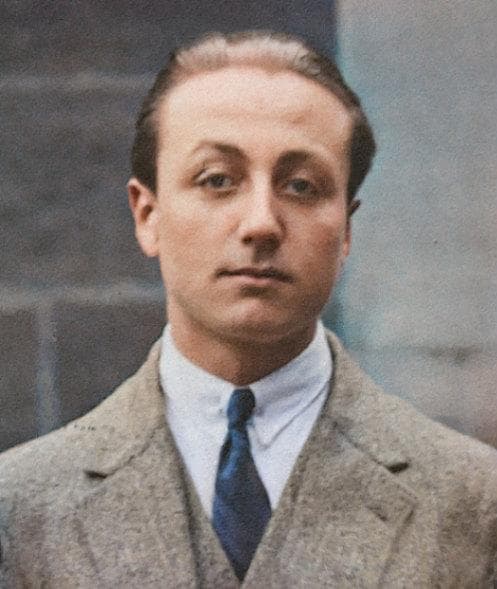
Jacques Decour, accused of communist propaganda, was arrested on February 19, 1942. The French police, who knew he was in contact with Georges Politzer, already indicted, soon suspected him of having collaborated with the underground newspapers L'Université libre and La Pensée libre. It appears that between February 20 and March 2 Decour was questioned every day. He didn't have a lawyer. A word from the last letter he wrote suggests that he was tortured. Around March 1, 1942, following an attack, the Germans demanded hostages. The police offered them, among other victims, the physicist Solomon, the sociologist Politzer, the writer Decour. All three were executed three months later, on May 30. Their bodies rest in the Bois-Colombes cemetery, twelfth division.
Let's leave the Germans, they are doing their job. They have the war they wanted. They will have it until the end. But every day since the armistice there have been French people who have delivered other French people. We kept up-to-date lists in the Interior and police offices. We had a black market: ten workers for one industrialist, fifty communists in exchange for a prefect. This is the kind of barter that French officials offered our enemy. What excuse do we see for this scoundrel? What reason would she give that was no more filthy than her act? Did the Vichy people cover her up? We will not forgive the people of Vichy either.
Jacques Decour, whose real name is Daniel Decourdemanche, was an associate professor of German and a teacher at the Rollin high school. He was thirty-two years old. Before the war, he directed the magazine Commune. He is the author of three books: The Sage and the Corporal (1930), Philisterburg (1932), The Fathers (1936).
The heroes of Le Sage are two young bourgeois people, two brothers, Jean and Jules Damiens: equally sensitive, but not very gifted for pleasure; all busy finding meaning in life — in their lives. And both thrown into distrust and revolt. One who is intelligent, by his opinions; the other who is rather stupid, by the very malice of a society without reasons.
Jean flees to Bordeaux. We will find him there unemployed, then a burglar. Communist orator, incendiary. At the end, he leaves for Ceylon, charged with a vague sociological mission. Jules, in the meantime, does an internship in a pharmacy in Nancy, tries to enter the orders, carries out vague intrigues with a kitchen maid, a beautiful thief. Military service comes: Jules lines up, gives moral speeches, becomes corporal. Jean kills himself.
If the novel needed a morality, it could be this: revolt, irregular life, even drugs are no less disappointing, for a well-born boy, than renunciation and bourgeois work. It all looks the same, it should be put in the same bag. The thieves say stupid things: make your way; learn the trade. The people in power, agitated by vices and torments, know too well that they did not deserve their place.
It was too easy to say to oneself, when the book appeared: “What a testimony!” It's also too easy to ask yourself: "Is he Jean or Jules? Where will that take him?" A young novelist exposes himself to this injustice. The Sage aroused curiosities, we waited for the sequel. There was little appreciation of what was already strong and rare about the work.
Writers were wondering, around 1930, if they had the right to write. It is an old question, which has hardly ceased to torment the best of them, since with Romanticism the literary problem came to take the place, and the seriousness, of the religious problem. The new evil of the century therefore followed the old one, it was perhaps more acute and more desperate. This is because we had seen some unfortunate examples before our eyes. It must be admitted that the masters before 1914 were content with little: France, with a rather short irony, with a low sensuality; Barrès, with a vague poetry, with a few sensational gestures; Maurras, of a superficial order. All three were too visibly satisfied with their beautiful style, with an adroit cuisine of words and sentences. As for the new masters, Proust, Valéry, they did not purposely become writers. They said it, you had to believe them. Literature was only a stopgap.
We can explain by this stopgap the entire baroque aspect of The Sage: the haste and then the extreme slowness of the story, the shifts in tone, the implausibilities. The author would obviously be angry that he was taken for a novelist. So what is it? "I will try to resemble a man more than all the men I know. Or if, as is possible, they are real men, then I will distinguish myself from them..." In the farewell letter that Jean Damiens writes to his mother, we recognize the voice of Jacques Decour.
Some will perhaps think that these are the worries of all young people, that a truly gifted writer absorbs himself in his gift, and forgets worry. No doubt; and this is what makes for the mediocrity of so many, as they say, gifted writers. Decour was also young—seventeen years old—when he wrote Le Sage. Its qualities are no less brilliant. It is an incisive, powerful and yet modest style, an urgent tone, quite serious humor; above all, the encounter of an agile thought, which moves in the moment from one side of the mind to the other, and of a singularly patient, precise, sufficient view of passing scenes:
“And are you going as far as the village?" said the woman. "It's still a long way away. So stay and sleep with us.
— Ah, damn! cried the child. I’ve seen enough of his face.” Without removing her hooves, her mother kicked her so excellently that she sat on the ground. Then she began to laugh out loud, and while the kid took his toy to a hiding place, Michel helped the laughing girl to get up. She made herself as heavy as she could, and there was a sort of struggle. When she was up and able to speak: “There is almost nothing to eat in the house!” This idea seemed funnier than the rest.
We heard the sound of a bicycle against the house. A man out of breath came forward. It was the husband. A dark guy who probably had to shave the next day.
“Ah! that’s good,” he said coldly, “while I’m in the village, you’re being made to have children by passers-by.
—They would always be better than yours.”
She thought she would please Michel in this way, who on the contrary wanted to go further, to escape the disgust that was overwhelming him. A noise caught him: in the entrance to the house, the farmer was loading a very beautiful hunting rifle. The woman was becoming interesting.
Then come the thoughts:
Michel remained seated with a glass of local wine and took no notice of the peasant woman's eyes. He was amused at having upset a small human group with his passage. He thought he was playing at disturbing an anthill with a twig. How agitated the critters were! Thus distracting himself from the storm unleashed by him, he could only relegate the woman to the rank of puppets: he noticed that she also worked. So... he was anguished by the idea that perhaps one day he would serve as an instrument of a superior, ironic and perverse will.
Daniel Decourdemanche, candidate for aggregation, was appointed professor in Prussia in 1931. Philisterburg is the story of his experience.
It's the simplest story there is. “To prevent reasoning in a vacuum, I will try,” he said, “to note only small true facts.” So here are the facts: Philisterburg, three hundred thousand inhabitants. Ancient citadel, dismantled by the Treaty of Versailles. Specialties: cotton, chocolate, batons. Beautiful toy and delicatessen shops. Great men, nothing. As for the men, here is Dr. Bär, principal. He is a confused agitator, of the apostle type and who pays himself with words. Young Bügler, electrician, who drinks his unemployment benefit. The Bügler widow, pursed mouth, pale forehead, enraged by her past greatness. The maid of the pension, a blonde, who shows everyone the photo of a wooden cross: “My first love,” she says. The French teacher, Mr. Bruneau, a bald, monocled giant, stuffed with useless science. All more or less ruined by the crisis, embarrassed by their unemployed, entangled in universal suffrage which they have no use for. But on the other hand, here is the study advisor Apel, who treats the history of the past, like that of the present, through the fear of big words, the search for simple causes; communist, or communicant. The clerk Adler, who has an irreducible opinion on all things, and never gets angry; he is a Nazi. Student Kraus, Nazi. Of these two, Jacques Decour writes:
As I am not devoid of sympathy for these men whom I believe to be pure and convinced, I do not wish them to come to power.
What does sympathy come from? This is because the Nazis believe that a man's opinions are binding on him; they are concerned about this man, his value, and the proofs he has given of it. Then:
_However skeptical, however superior to reality we may be, we must believe in certain sacred things. Stendhal, Heine would not please me without this corner of fervor.
But the Nazis have a sense of the sacred, even if they apply it wrongly.
In Germany, nationalism is militant... It is the bane of foreign policy, and the dark spot of the future.
On the imminence of a German-Polish war, on “the series of misunderstandings with which France and Germany are making history”, Jacques Decour, without ceasing to be natural, and as if nonchalant, makes elsewhere the most accurate remarks. He sees sharply, but he sees the truth.
The Fathers are the elders: all those who obtained — at the price of what concessions? — to grow old, to live. The first, Mr. Bouton, is goodness itself. Former worker, now rich with wealth that he would like to leave to his adopted son, Michel. Michel refuses and leaves. If he learns one lesson from this father, it is strictly this: that one must make something in life, at worst, one's fortune.
This Mr. Bouton dies of congestion as soon as we have seen enough of him. The second father is Mr. Mouche, who makes fun of everything, wears a false beard, insists that in every adventure, without ever weighing the pros and cons, one must throw oneself into the water. Precisely, Mr. Mouche ends badly: he drowns. Not so quickly that he taught Michel to awaken in himself, beyond the debates of conscience, the “demon who decides justly”. The last father is an old doctor, Mr. Siegfried. He is patient, he is humble, and, as to the humble, the world seems to him full of great things and great men. He feels inferior to everyone he loves and wants to help. Following his example, Michel discovers a way to tolerate oneself. It’s knowing how to “connect” with other men.
We also meet, in The Fathers, an argumentative and agitated artist, the bookseller's son, who fights for the workers, and young Isabelle, with whom Michel falls in love. But I neglect the novel here. It must be admitted that Decour himself neglects it a little. The tone is more incisive, more pointed than that of the Sage:
_The Dieppe dyke was endless and deserted. Abandoned by their servants, the large hotels opposed an army of shutters and boards to the expected storms.
Fun, without stopping being tender:
The unhappy old dreamer moved forward on his bicycle, lulled by the movement of his legs and the rhythm of common sense. Of the most modest poetry:
... _Happiness was in this blind lightness neither learned nor wanted. His body pretended to sleep and the friendship that had touched him enveloped him in sounds that he recognized, that he had always known... A young blonde and blue girl smiled amidst tears. Radiant beings gave themselves over to the fury of living.
Jacques Decour is not unworthy of his spiritual fathers. He shows himself to be more demanding than Stendhal, more coherent than Gide, more upright than Barrés. And yet less present. This novel of an apprenticeship seems disinhabited, unoccupied; he embarrasses. As if the heart had ceased to be there. Did Decour realize this? He wrote:
_There is a great deception in wanting to be both the author and the hero of a novel. If you feel like the man of a book, you must live this book, but you must not write it.
In the meantime, as we may have guessed, Daniel Decourdemanche had become a communist.
I wouldn't want to say anything here that could hurt a French heart. We must recognize our communists as having several of the greatest merits: their doctrine is learned and complex, their courage is immense. They never stopped giving us all the example — little understood, little followed — of their civic virtues. Some say that these virtues were not always exercised, during the interwar period, for the greater good of France. The communists would have no problem responding that a fairer France would have deserved their virtues. One of these virtues was self-sacrifice for Decour. We saw him deliberately deprive himself, from 1936, of the charms that made his novels subtle, delicate, touching. He said in Commune:
The era of 1830 was only romantic in the arts because it was very reasonable in social reality. Likewise, the truly romantic era of the Revolution produced only frozen works: one must write or live.
Having decided to live, he agreed to write frozen. He saw two camps in society, like Stendhal. In one reigned wealth, vanity, boredom; in the other camp there was poverty, but reason and freedom, enlightenment, social justice. He fought with all his strength so that France once again became the nation which, once upon a time, offered men, not servitude and darkness, but joy and progress. And no doubt he was able to accept the world without reservation, as long as he tried to change it. Order is not like happiness: we find it when we look for it: and happiness at that. Later, Jacques Decour was also to find, in the martyrdom and in the death of which he was worthy, this proof of his value which he had sought for a long time. But his wife and his daughter, his sisters and his parents, his friends, his students remain sad and struck.
Our young deaths are secret. What would have become of Vildé, Lévitzky, Politzer, Solomon? I think that Decour one day returned to the novel. I think so without proof: he spoke little about his projects, even to his friends. In 41 it was indeed about that! Our magistrates accuse him of having defended, against the forces of German oppression, an unhappy and betrayed France. I just ask to believe them. It is true that the articles in La Pensée libre, which were attributed to him, are bold and strong. We will soon collect the documents of his trial, and we will publish them to his glory.
Jean Paulhan, 1943, in Complete Works, Tchou.
Resources
Jacques Decour - Museum of the Resistance
Jacques Decour, the forgotten man of French letters (1910-1942)
Jacques Decour, the forgotten face of the Resistance
See also, by Jean Paulhan :
Mention of Jacques Decour in texts by Jean Paulhan :
- Jean Paulhan citoyen de Jacques Debû-Bridel
- Un des premiers de l’équipe : Jean Paulhan de Bernard Baillaud
Bibliography of texts published in the NRF
The texts below, published in La Nouvelle Revue Française, are grouped into four main sets: texts by Jacques Decour, notes and columns by the author, texts about the author, and, when available, translations by the author.
Texts by Jacques Decour
- La révolte, 1934-03-01
Notes by Jacques Decour
These texts by Jacques Decour may include reading notes, mood notes, performance reviews, miscellaneous pieces, or previously unpublished texts. They appeared in NRF sections such as Chronique des romans, L'air du mois, Le temps comme il passe, etc., or in tribute issues.
- Goethe, I, par Friedrich Gundolf (Grasset), 1932-08-01, Notes : lettres étrangères
Translations by Jacques Decour
- Abandon de la culture, by Ernst Robert Curtius, 1931-12-01
Chronological distribution of texts published in the NRF (1908-1968)
This chart shows the chronological distribution of texts across the four categories defined above: Texts, Notes, Translations, and Texts about the author.
Bibliography of texts published in the journal Commerce
The texts below, published in the journal Commerce, are grouped into two sets: texts by Jacques Decour and texts translated by the author.
Translated texts by Jacques Decour
- Rudolf Kassner, L’individu et l’homme collectif (p. 199-229), été 1931 [230 p.]
Bibliography of texts published in the journal Mesures
The texts below, published in the journal Mesures, are grouped into two sets: texts by Jacques Decour and texts translated by the author.
Translated texts by Jacques Decour
- Heinrich von Kleist, L’élaboration de la pensée pendant le discours, 15 juillet 1936 [194 p.]