Our friend Jacques Decour
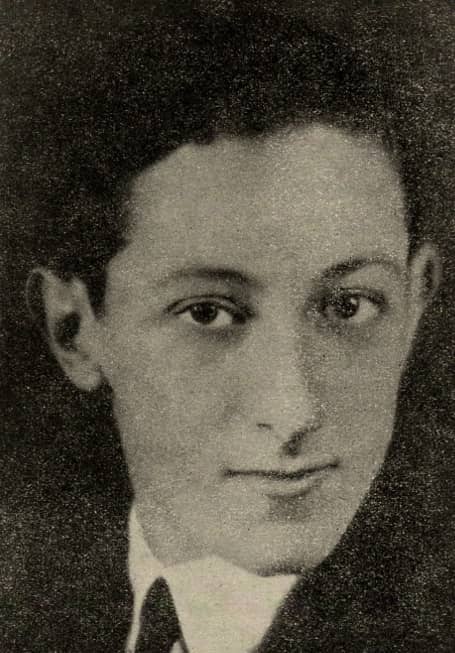
Jean PaulhanJacques DecourIt was one year ago on May 30 that Jacques Decour was shot. We have not forgotten our comrade in the struggle. He is still among us with his lucid intelligence, his irony, his courage and the delicate smile that we loved. He is always by our side and we strive to be worthy of him. One of us recalled his memory in a moving article that you will read below. And this homage takes on all the greater value as its author does not share the political ideas that Jacques Decour had. It will testify to the close union of all those who fight for the independence and greatness of the homeland within the National Front.
* * *
Jacques Decour was arrested by the French police on February 19, 1942: he was accused of communist propaganda. On March 5, when his trial was just beginning, he was handed over to the Gestapo. It was only on May 30, after a hundred days of interrogation and torture, that he was shot, alongside the physicist Solomon and the philosopher Politzer. All three are buried in the Bois-Colombes cemetery, twelfth division.
The real name of Jacques Decour, nephew of a famous orientalist, was Daniel Decourdemanche. A German-speaking teacher, a teacher at the Rollin high school, he had written two novels: The Sage and the Corporal, The Fathers, whose common theme is: how can a young bourgeois person, today, live with a good conscience? His heroes tried, without much success, love, rebellion, orderly living, even burglary.
The Fathers' conclusion was: "There is a great deception in wanting to be both the author and the hero of a novel. If one feels himself to be the man of a book, he must live this book, but he must not write it..."
Then Jacques Decour became a communist.
Before the war, Jacques Decour directed the magazine Commune. The French police accused him of having inspired, in 1940, L'Université Libre and La Pensée Libre. It was he who took it upon himself, in 1941, to found the Front National magazine where we will read these lines.
He was long and thin, with a mocking air. He had retained the kindness of a child. His gifts were so diverse and so great that his friends wondered if he could ever keep all that he promised. He died at thirty-two years old, without ever having renounced a single one of his convictions, without having betrayed a single one of his comrades. He wrote in 1939, in Commune:
“The French Revolution taught us that happiness in political freedom and national independence are inseparable.”
He did not separate them. It was for both that he prepared to die; then he died. It is for both of them that he will be avenged. Then his glory will come.
(Text published in Les Lettres françaises n° VII, June 15, 1943, p. 3)