In praise of Jacques Decour
Jean PaulhanJacques DecourThree months after the armistice, I met Jacques Decour, rue de Vaugirard. He passed by on his bicycle, seemed in a hurry, did not give his address. He had time to tell me: “After all, France has what it deserves.” And: “Pétain, this shame is as much as any other.” Okay about the shame. Then he took off on his machine.
Decour thought that a country whose laws are unjust cannot count on the devotion of the privileged, all occupied with their privileges, nor on that of the victims who would defend what? What they know by hearsay, we don't know what vague hope. On the contrary, it seemed to me that the other side of privilege, and its counterpart, could be limitless self-sacrifice. But the event proved him right.
I later saw Jacques Decour four or five times a week: at Jean Blanzat's at Debû-Bridel, at home, at the La Frégate café, and even one day at the NRF. We were preparing the newspaper. One evening I gave him ten thousand francs that Robert Debré gave us. He showed contentment, and I realized that usually I saw him as rather cold.
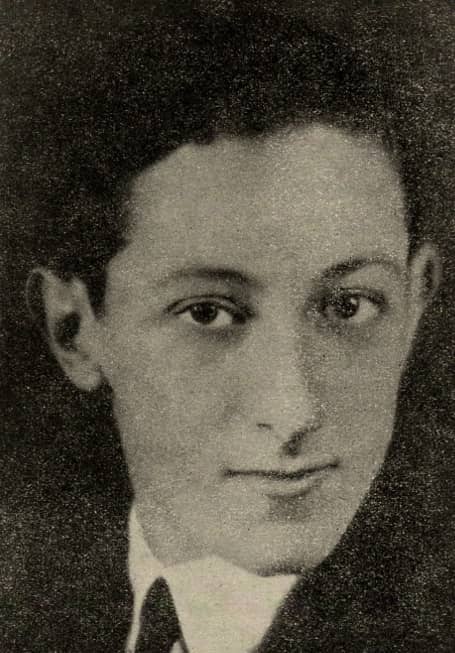
Decour was tall and thin, with pointed elbows. The mouth, long and carrying more than one smile at a time, so that it often embarrassed you. The eyes, tender no doubt; but the whole face spoke of demand. He was one of those men who say: “It’s not he who would hesitate to…”
There were some twenty years of friendship between us. I liked his novels, which he hardly liked anymore. Faced with his political essays, I hesitated more. (But these are questions where I don't hear much.)
We exchanged news about the war. Few general views. Few forecasts. However, he happened to say to me: “When the allies arrive, the strangest thing will be learning about it from outside.”
How fair and final it was to say that in forty-two! I only realized this, as they say (badly), two months ago. When I clearly saw, to my disappointment, that I was foolishly expecting I don't know what, the newsboys perhaps, and the meetings in the street and in each house the joyful visits from floor to floor. No, nothing. And we were so embarrassed (although delighted) that we didn't even know what to call the event. The Invasion, we seemed to blame them. The Landing, but they weren't going to stop there! The Liberators was vague; it was rather sentimental. No, Decour was right. This thing was so strange that it barely had a name.
We weren't always very serious. Yet he said to me one evening: “Now I know that they can take me and do with me what they want. I will not speak.”
It was a few days later that they arrested him. They did with him what they wanted. And he didn't speak. But I come back to what I wanted to say, which is of a general nature. The fact is that the homeland is not an easy thing to think about, as we have seen, moreover. Everything must be useful, and we would be lost if, in the next tests, there were French people among the best who still felt that France deserved to be punished.
Pericles says, in Thucydides, something like this. He said: “If I prove that Athens has just laws, I will have sufficiently praised our heroes.” But for us, it is quite the opposite: the day France has just laws, we will have praised Jacques Decour worthy of it.
August 1944