hai-kaïs
Jean PaulhanPaul-Louis CouchoudHaï-kaïs are Japanese poems of three lines; the first verse has five feet, the second seven, the third five. It is difficult to write shorter; we will say: less oratorical. Japanese poetry of thirteen centuries is contained, more or less, in these crumbs.
Basil Hall Chamberlain calls them lyric epigrams. “Light window open for a moment,” he said, or “sigh interrupted before you hear it.” In any case, these are poems without explanation.
Paul-Louis Couchoud knew how to translate them.
❦
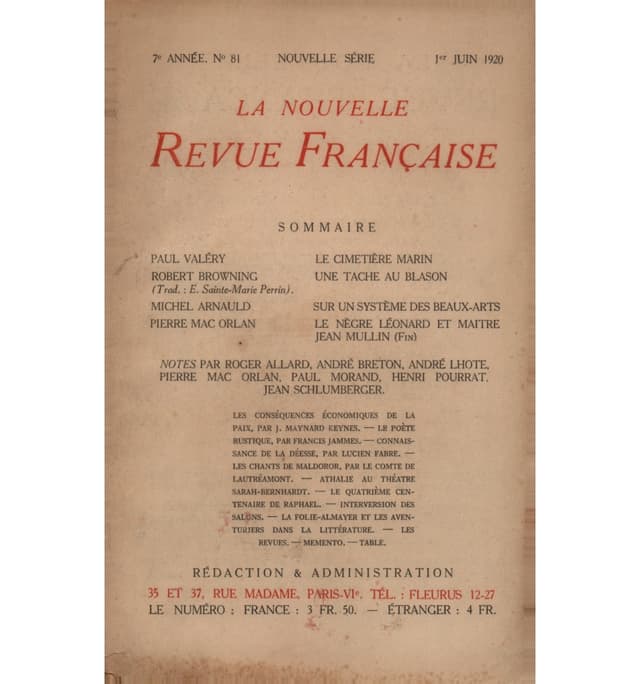
Read the original text published in the NRf from September 1920, as well as the choice of haï-kaïs (free reading on Internet Archive)
See also:
- the working note from Jean Paulhan sent to Jacques Rivière.
- the Japanese hai-kaïs, reading report of the "lyrical epigrams of Japan", by Paul-Louis Couchoud, by Jean Paulhan, published in La Vie of February 1917.
- Hain-teny and haiku. Detours and paths of Jean Paulhan by Magali Bossi
- Poetry in history: Jean Paulhan against the tide by Clarisse Barthélemy
- The Empire of Signs: a turning point in the reception of haiku in France? by Muriel Détrie
Finally, see the notice on haiku by Bernard Baillaud.