
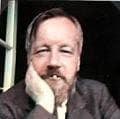
Bernard Groethuysen
We have been pressing Groethuysen for a long time to bring together the essays and portraits that can be read today; but he postponed this care from year to year. Now we miss him, and the book is here. Groethuysen first promised us to give it a preface. Then he gave up on this project; then he trained him again. All this, a little nonchalantly: he didn't like to put himself forward, and one would have said that he had once and for all decided to live the lives of others, rather than his own. But we must try to keep what he promised us.
History, an intelligible world
In France, we hardly imagine that a philosopher can be modest. If he obviously is, we generally decide that he is not a real philosopher. And yet modesty was, in the very land of metaphysics, the adventure of a great school.
Fichte, Schelling and the greatest of the three: Hegel, had no sooner finished developing the majestic spirals and avenues of their systems than everyone felt disappointed. Everything was explained, and nothing seemed worth explaining anymore. The smallest wheel in the universe now had its place and its role. We simply had lost the desire to run it. Like in a family, where the father pronounces the right word each time, the final sentence: the children do not take long to realize that he is preventing everyone from thinking. “But anyway, (they ask themselves) what do I have to do with it?” In short, the thought was to start again.
We know how Marx and Kierkegaard started it again - starting with Father Hegel, all the same against him. Dilthey's solution was more timid. It was decided that a single man, even if he were the greatest genius in the world, remained incapable of solving all the problems that this world posed to him. There were too many, and too diverse, for the meager experience of an individual - moreover, limited by the myths of his environment, by the aspirations of his time - to be sufficient. Hegel himself, here and there, must have cheated. Dilthey and his students therefore dreamed of a philosophy with the second power, which would begin by marrying - even if it meant going beyond them later - the various ways that men have had, not only of imagining, but of appropriating things: the experiences and reflections of lawyers as well as poets, and of captains as well as philosophers (whose systems would then appear as the sign of something else, which it was up to the metaphysician to bring out). It was about understanding so many thoughts, it was even about reproducing and miming them; the synthesis would come later. In short, a historical philosophy had to go beyond history just as the Encyclopedia, which names and classifies objects, animals and lands, goes beyond the story of a naive explorer.
This was the work that Groethuysen, student and friend of Dilthey, pursued for his part, in the essays which bring together Philosophical Anthropology and The Origins of the Bourgeois Spirit. Don't be fooled by their friendly or familiar appearance. They aim higher, and this aim makes their soul. It is nothing less than working to form, from small pieces and pieces, the new intelligible world.
Love of the adversary
But while waiting for this world to be constituted? Well ! Groeth held that the philosopher worthy of the name must avoid expressing his opinion until then. (And who would dare to decide on the details, when he ignores the Whole?) There is every benefit to that.
Because it is the paradox, it is also the danger, of the system, of the treatise - of writing in general - that it expresses less a thought in action than a stopped thought: a thought which is no longer there. “Descartes,” Groeth said (roughly), “reflects, he reflects, reflects. Then he finds: “I think, therefore I am,” and he stops thinking.”
This is a statement that has long surprised me. I wonder if there isn't too much room for error, perhaps for lies. (But are we capable of lying?) With Groethuysen, he only yielded, in any case, to the most lively independence.
By nature, Groethuysen preferred questions to answers. Or rather, he had no rest until he had found, under each answer, the question that provoked it: constantly searching for a thought that would not stop thinking, and for the rest trusting the mind, completely assured that there is no idea – however absurd or crazy it may seem – that is not attached to other ideas by some tenuous thread.
Independence is an understatement. Someone who claims to love freedom will not rest until he has had the enemies (he says) of freedom put in prison. But Groethuysen bore witness to this freedom in the noblest form — or the only one — that can be called by this name. He preferred to his ideas, the ideas of his friends - even those of his indifferents, or of his adversaries. He held that every thought begs to be rethought. Thus he traveled through the world of doctrines and no idea that presented itself to him had waited for him in vain.
Not that his political faith was lukewarm or indecisive. He was a Marxist, and a strict communist; This is how he and Alix Guillain did not marry, fell out with their family and refused the inheritance from their parents, agreeing to own nothing but the books, which Groeth needed for his work. Groethuysen allegedly allowed certain enemies of freedom to be imprisoned. But he would have gone, I believe, every day to bring them oranges and talk with them. Ultimately, he would have spent his entire life in prison.
There was, in the history of Letters, another era, when writers found themselves drunk with systems and perfection: at the time of the Encyclopedia, precisely. So too, we must have preferred dissonance to agreement (or rather we have not imagined an agreement that was not based on dissonance). So we were also able to praise a writer's variety, returns, contradictions. “When I remember the astonishing multiplicity of his knowledge, the impetuous tumult of his imagination, all the charm and all the disorder of his conversations, I dare to compare his soul to nature as he himself saw it, abundant in germs of all kinds, gentle and wild, simple and majestic, but without any dominant principle...” This is how Meister spoke of Diderot, and how we speak of Groethuysen. He was at home in the universe of thought, and naturally at ease as each of us can be in our body.
Groeth in his studio
Groethuysen had something stormy and violent in his expression, which was perhaps due to the fact that the muscles of the face, unlike those of the body, gave at first glance the feeling of strength or exercise. The eyebrow was rather barbaric. Eyes in their cave, between green and silver-grey, quick to flinch and blink. The bush of hair at the top, of the beard at the bottom, deprived a pale and changing face of fixed form.
All in all, nothing in his features indicated the slightest tenderness.
However, I have never seen a face so well suited to turning dark discontented or hateful. Goodness, which was great, which was warm and sure, remained in him full of invention.
He spoke as he walked back and forth in his workshop, a muffler around his neck. Whether he was in boxers, pajamas, pants (which he sometimes forgot to button), it was always with the same vivacity, and constantly smoking blues (when he had them) and, during the Occupation, eucalyptus or cigarettes made from a curious mixture of herbs, which Alix rolled every evening. The falling ashes created springs and clouds on his jacket, a sort of inky dream, which attentive Alix came to shake; sometimes also (with the eucalyptus) small fires, which everyone worked to put out. And you had the vague impression that his face, if he came a little closer to you, would become too large to be entirely plausible.
However, he was extremely suspicious of things. He had a certain way, which I only saw in him, of looking sideways at a stove, an electric kettle, as one looks at a small wild animal. It was enough to frighten him when a gas tap started to hiss: and if Alix was away, he would immediately run to our house - because at the time we lived in two neighboring workshops - to ask for advice.
Yet this fearful man, who was sometimes intimidated by an object, a child, an animal, an ignorant person, radiated confidence. As soon as he was there, everyone felt protected; but protected, that's an understatement: increased, emboldened, capable of anything. Whether in a bistro, at a magazine, in a palace, he pronounced each one with his dignity. It would not have occurred to us to be jealous of the extraordinary richness and variety of his words, and I believe that he had that particular delicacy of the shy - the best of the shy - who know how to never intimidate others.
This book therefore appeared, more or less as Groethuysen had initially wanted it. I simply took the liberty of adding a youthful writing which must date from 1910: The Child and the Metaphysician - the only text to my knowledge where Groeth speaks openly about himself: even then it is under the name of Sören Kierkegaard (and Groeth could also recognize himself in the one who readily called himself: the problem man); as it is, this Child can quite well take the place of the preface that our friend died before writing. Better than this little introduction. Ah! I promised myself not to talk about myself. Still, I sure miss Groeth. Getting old isn't what you think it is. All in all, we keep the same pleasures, and often more vivid. We become freer, we think better (at least, we imagine so). But those, for whom we wanted to think, are leaving. Getting old means that Groethuysen is no longer here.
Jean Paulhan, 1945, in Complete Works, Tchou
Resources
Passages from Groethuysen, by Robert Maggiori
The unknowns of History - Bernard Groethuysen - France Culture (3 episodes, France Culture, 1984)
Bernard Groethuysen, a philosophical friendship, Jean-Toussaint Desanti
In the Friendship of Bernard Groethuysen, pt. 1, Jean-Toussaint Desanti
News :
- Commentaire sur la mort de Groethuysen à Luxembourg – 2023-05-03
See also, by Jean Paulhan :
Text by Bernard Groethuysen about Jean Paulhan :
Mention of Bernard Groethuysen in a text by Jean Paulhan :
- Jean Paulhan au creuset des influences de Bernard Baillaud
Bibliography of texts published in the NRF
The texts below, published in La Nouvelle Revue Française, are grouped into four main sets: texts by Bernard Groethuysen, notes and columns by the author, texts about the author, and, when available, translations by the author.
Texts by Bernard Groethuysen
- Hölderlin, 1925-11-01
- Introduction à la vie bourgeoise, 1926-12-01
- À propos de Kafka, 1933-04-01
- Perspectives de philosophie moderne, 1934-06-01
- Freud, 1939-11-01
Notes by Bernard Groethuysen
These texts by Bernard Groethuysen may include reading notes, mood notes, performance reviews, miscellaneous pieces, or previously unpublished texts. They appeared in NRF sections such as Chronique des romans, L'air du mois, Le temps comme il passe, etc., or in tribute issues.
- Lettre d'Allemagne, 1922-04-01, Notes : lettres étrangères
- Lettre d'Allemagne, 1923-02-01, Notes : lettres étrangères
- Max Scheler, 1928-10-01, Notes : lettres étrangères
- Hécate, par Pierre Jean Jouve (Éditions de la N. R. F.), 1929-03-01, Notes : le roman
- Les Conquérants, par André Malraux (Grasset), 1929-04-01, Notes : le roman
- Être et avoir, par Gabriel Marcel (Ferdinand Aubier), 1936-02-01, Notes : la philosophie
- Spengler, 1936-06-01, Notes : lettres étrangères
- Études kierkegaardiennes, par Jean Wahl (Fernand Aubier), 1938-05-01, Notes : philosophie
- Sueur de sang, par Pierre Jean Jouve (Éditions de la N. R. F.), 1938-07-01, Notes : la poésie
- La Vie et ses problèmes, par Jean Rostand (Flammarion), 1939-10-01, Notes : sciences
- Nouveaux propos de Jéroboam, par Paul Laffite (Éditions de la Nouvelle Revue Critique), 1939-11-01, Notes : essais
- Mesures U. S. A., 1939-12-01, Les revues
- Usonie, par Jean Prévost (Éditions de la N. R. F.), 1940-01-01, Notes : les essais
- Histoire de la critique d'art, par Lionello Venturi (Éditions de la Connaissance), 1940-02-01, Notes : la critique
- Histoire de la découverte de la terre, par Ch. de La Roncière (Larousse), 1940-02-01, Notes : histoire
- Le mythe et le livre, par René M. Guastalla (Éditions de la N. R. F.), 1940-05-01, Notes : les essais
Translations by Bernard Groethuysen
- Poèmes, by Friedrich Hölderlin, 1925-11-01
Texts about Bernard Groethuysen
These texts may include thematic studies about the author, correspondence, reading notes on works by or about the author, interviews conducted by the author, or works edited by the author.
- Origines de l'esprit bourgeois, par Bernard Groethuysen (Éditions de la N. R. F.), by Daniel Halévy, 1927-10-01, Notes : littérature générale
- Anthropologie philosophique, par Bernard Groethuysen (Gallimard), by Yvon Belaval, 1954-03-01, Notes : les essais
- Philosophie de la Révolution française, par Bernard Groethuysen (Gallimard), by Robert Campbell, 1956-09-01, Notes : la littérature
Chronological distribution of texts published in the NRF (1908-1968)
This chart shows the chronological distribution of texts across the four categories defined above: Texts, Notes, Translations, and Texts about the author.
Bibliography of texts published in the journal Commerce
The texts below, published in the journal Commerce, are grouped into two sets: texts by Bernard Groethuysen and texts translated by the author.
Texts by Bernard Groethuysen
- Présentation de Tavernier (p. 137-142), hiver 1924 [258 p.]
- Portrait de Maître Eckhart (p. 149-155), printemps 1925 [188 p.]
- Documentation sur la folie de Hölderlin (p. 189-207), automne 1925 [232 p.]
- Essai sur la pensée de Saint Augustin (p. 149-160), printemps 1927 [200 p.]
- Notes sur Jérôme Cardan (p. 149-150), été 1929 [216 p.]
- Note sur Büchner (p. 143-144), printemps 1931 [186 p.]
- Introduction et présentation de Sinica, Récits de missionnaires Jésuites (p. 141-144), printemps 1932 [198-(VI) p.]
- Note (p. 198)), printemps 1932 [198-(VI) p.]
Translated texts by Bernard Groethuysen
- Maître Eckhart, Fragments (p. 156-173), printemps 1925 [188 p.]
- Rudolf Kassner, Le lépreux (p. 95-122), automne 1925 [232 p.]
- Friedrich Hölderlin, Poèmes (p. 171-186), automne 1925 [232 p.]
- Rudolf Kassner, Des éléments de la grandeur humaine (p. 107-170), automne 1926 [194 p.]
- Rudolf Kassner, La chimère (p. 97-136), automne 1928 [174 p.]
- Georg Büchner, Woyzeck (p. 145-186), printemps 1931 [186 p.]
Bibliography of texts published in the journal Mesures
The texts below, published in the journal Mesures, are grouped into two sets: texts by Bernard Groethuysen and texts translated by the author.
Texts by Bernard Groethuysen
- Le savant et l’île inconnue, 15 juillet 1935 [188 p.]
- Bayle, 15 janvier 1937 [188 p.]
- Épistémologie du rêve, 15 octobre 1938 [170 p.]
- Introduction au Journal intime d’Amiel, 15 janvier 1939 [160 p.]
- Carolus Bovillus, 15 janvier 1940 [176 p.]
Bibliography of texts published in Les Cahiers de la Pleiade
The texts below, published in Les Cahiers de la Pleiade, are grouped into three sets: texts by Bernard Groethuysen, texts translated by the author, and texts about the author.
Texts about
These texts may include thematic studies about the author, correspondence, reading notes on works by or about the author, or works translated by the author.
- Bernard Groethuysen by André Gide, avril 1947 [292 p.]