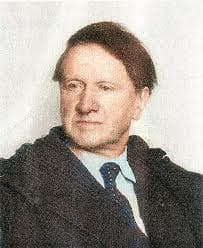
Vincent Muselli
He put off his poems indefinitely and cared little about seeing them published; the most scrupulous of poets, if he were the least scrupulous of men: libertine, in the sense of the 17th century, or, as we say, anarchist. The scruples in him were starting to get difficult. If he arranged to meet you at the corner of two wild streets, around two o'clock in the morning, you were sure to find him there; in a bistro, at more honest hours, he didn't come. But the next day he imagined excuses so subtle that it was a pleasure to hear them.
He has not written a page, prose or poetry, which does not give the feeling of mastery: so closely does his execution follow the subject, and sometimes discover it. He had the right taste and ear. He was perfectly intelligent, and I don't know of a poet who dominates his subject more clearly. (But should the poet dominate his material? Ah! that’s another question.)
And what was he proposing? He had passed through Virgil and Marot, through Saint-Amant and the Baroques. He admired Moréas, from Plessys. And no doubt he was tempted more than once to “cheat with the centuries, this principal act of the poet” (as Mallarmé said, apropos of Moréas, precisely). However, his poems were never without this secret allusion to spoken language, which was lacking in the Romanesque School. However curious he was about the archaisms and oddities of language, he never sought - whether in gnomic poetry or in didactics - but to establish a perpetual language, which drew as much from the past as from the present.
It seems to me that his poems of love and knowledge, so perfectly elegant, sometimes remain a little frozen. But he sang admirably of good food, drunkenness, the suburbs:
Old walls full of venom, poisoned roads,
For your restless heart, this is where it feels good.
See it extending, beyond the vapors of the coal,
A hateful horizon populated by chimneys...
old age, the ruin of things:
The cage will have lost its birds and its songs;
The glass will have made way for common paper;
And you will see, misfortune redoubled by the ice,
On their uneven feet our furniture stumbles...
death:
Don't worry about the trees or the roses,
What does their unworthy death matter to our love,
Go! our heart escapes the disaster of things,
He who feels the shadow coming and who does not tremble!
Vincent Muselli lived poor. He died, aged seventy-seven, suffering from cancer. Yet he never had any complaints. As long as he was able to speak, it was with grace and irony; and it was not in his work alone that he gave the feeling of mastery.
Jean Paulhan, 1956.
Resources
Correspondance : Vincent Muselli & Jean Paulhan, 1927-1951
See also, by Jean Paulhan :
Bibliography of texts published in the NRF
The texts below, published in La Nouvelle Revue Française, are grouped into four main sets: texts by Vincent Muselli, notes and columns by the author, texts about the author, and, when available, translations by the author.
Texts by Vincent Muselli
- Les sonnets à Philis, 1927-05-01
- Nous irons tous deux, 1929-09-01
- Stances de contre-fortune, 1930-12-01
- De l'argument qui prouve trop et qui - partant - ne prouve rien, 1933-02-01
- Les convives, 1943-06-01
Texts about Vincent Muselli
These texts may include thematic studies about the author, correspondence, reading notes on works by or about the author, interviews conducted by the author, or works edited by the author.
- Vincent Muselli, by Jean Paulhan, 1956-08-01, Notes
- Œuvre poétique, de Vincent Muselli (Point et Contrepoints), by Jean Guérin, 1959-11-01, De tout un peu
Chronological distribution of texts published in the NRF (1908-1968)
This chart shows the chronological distribution of texts across the four categories defined above: Texts, Notes, Translations, and Texts about the author.
Bibliography of texts published in Les Cahiers de la Pleiade
The texts below, published in Les Cahiers de la Pleiade, are grouped into three sets: texts by Vincent Muselli, texts translated by the author, and texts about the author.