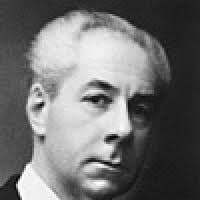
Roger Martin du Gard
It is a friend of the rarest kindness that we lose. I don't think there is the slightest imprudence in predicting to Roger Martin du Gard the glorious survival he wanted. If literary critics are not enough to ensure this survival, sociologists will take care of it, or moralists, historians, politicians why not. Never has a novelist attempted more carefully to impose their historical and social context on his characters. Never has an author achieved his design better. It is in Jean Barois that we will one day read the Dreyfus affair, in Les Thibault the war of Fourteen, in Le Colonel de Maumort the war of Forty. And perhaps the attentive reader will thus find himself better prepared to take part in the events to come. (Roger Martin du Gard hoped so at least.)
Each of his great novels is therefore the story of an apprenticeship. Rather than asking questions of conscience or pursuing some metaphysical chimera, it is for man to respond as soon as possible and as best as possible, without going beyond his natural self, to the questions that history poses to him - the history that is being made, the history in which we are given to intervene and which we are undoubtedly given to transform. Moreover, his characters — at least those to whom he is attached — analyze themselves, judge themselves, make an effort to direct themselves. If they come across a mystery, be patient. The mystery will not resist some new episode - one of those brief flashes of light that Roger Martin du Gard knows how to dose as a perfect playwright, too spontaneously adept at preparations, effects, twists of theater to see twists of theater, effects or preparations. The novel will not end until Antoine, Jacques, Jenny or Jean are fully known: exhausted.
Martin du Gard's remarks still suppose this: that life, from a literary point of view, is sufficient in itself; it is that it offers to those who examine it methodically and put it into files, without being put off by any of its aspects, the beginnings, the episodes and the conclusion, in short the various chapters of a novel, which all that remains is to put down on paper. Such was already the doctrine of Duranty, such was the design of the naturalists. Roger Martin du Gard applies it thoroughly, without the slightest cynicism, but with a boldness that has remained perceptible to us - patient boldness, rather than stylized. No one would dream of saying that he writes badly, no one would dream of saying that he writes well. But his characters are all familiar to us.
Without ever having been considered a difficult author, the presence of Roger Martin du Gard in Letters had something of a secret: outside the Academies, outside fashion, outside Politics it goes without saying. Twenty years ago he entered into the same silence that came to Proust and Valéry from their first work. Here we cannot avoid wondering what the effects of learning were for Roger Martin du Gard himself. However, the initial assumptions are simple and very common: it is that peace, justice, science, freedom, truth go hand in hand in a world without God and each day will impose themselves better on man to the detriment of faith, blind force, injustice and, if necessary, the established order. As for the conclusion, Martin du Gard in his interviews, if not in his writings, made no secret of it: it was despair without recourse, it was absolute pessimism, tempered by kindness.
Jean Paulhan, 1958.
Resources
Correspondance : Roger Martin du Gard & Jean Paulhan, 1925-1957
See also, by Jean Paulhan :
Bibliography of texts published in the NRF
The texts below, published in La Nouvelle Revue Française, are grouped into four main sets: texts by Roger Martin du Gard, notes and columns by the author, texts about the author, and, when available, translations by the author.
Texts by Roger Martin du Gard
- Jean Barois (fragment), 1913-10-01
- La Gonfle, 1928-05-01
- La Gonfle (Fin), 1928-06-01
- Parmi les papiers posthumes de M. Thibault, 1928-11-01
- Confidence Africaine, 1931-02-01
- Le dernier acte, 1936-11-01
- Ma dette envers Copeau, 1955-10-01
- Lettres, 1967-12-01
Notes by Roger Martin du Gard
These texts by Roger Martin du Gard may include reading notes, mood notes, performance reviews, miscellaneous pieces, or previously unpublished texts. They appeared in NRF sections such as Chronique des romans, L'air du mois, Le temps comme il passe, etc., or in tribute issues.
- Le Vieux-Colombier. Conférence de Jacques Copeau..., 1919-12-01, Notes
- Lettres à Pierre Margaritis (Une consultation littéraire), 1958-12-01, Textes inédits
Texts about Roger Martin du Gard
These texts may include thematic studies about the author, correspondence, reading notes on works by or about the author, interviews conducted by the author, or works edited by the author.
- Les Thibault, IV, V, par Roger Martin du Gard (Éditions de la N. R. F.), by André Thérive, 1928-07-01, Notes : le roman
- La Mort du Père, par Roger Martin du Gard (N. R. F.), by Benjamin Crémieux, 1929-08-01, Notes : littérature générale
- Un taciturne, de Roger Martin du Gard (Comédie des Champs-Élysées), by Ramon Fernandez, 1931-12-01, Notes : le théâtre
- Roger Martin du Gard, by André Rousseaux, 1932-11-01, Revues et journaux
- Roger Martin du Gard : Été 1914, by Paul Nizan, 1937-01-01, Chroniques
- Roger Martin du Gard, by Louis Martin-chauffier, 1937-12-01, Les revues
- Épilogue, par Roger Martin du Gard (Éditions de la N. R. F.), by Jean Vaudal, 1940-06-01, Notes : le roman
- Roger Martin du Gard, by Albert Camus, 1955-10-01, articles
- Lettres à Roger Martin du Gard, by André Gide, 1957-01-01, Textes
- Roger Martin du Gard, by Jean Paulhan, 1958-10-01, articles
- Roger Martin du Gard, by Jacques de Lacretelle, 1958-12-01, L'homme, l'ami
- Devenir ou L'âme exquise de Roger Martin du Gard, by Jean Cocteau, 1958-12-01, Rencontres
- Roger Martin du Gard et Les Faux-Monnayeurs, by Jean Delay, 1967-12-01, articles
Chronological distribution of texts published in the NRF (1908-1968)
This chart shows the chronological distribution of texts across the four categories defined above: Texts, Notes, Translations, and Texts about the author.