Franz Hellens
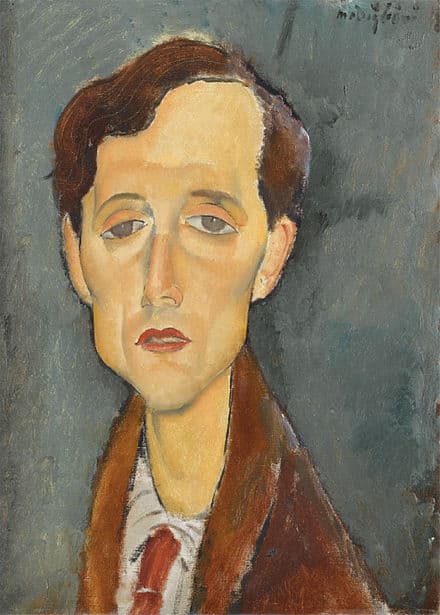
Franz Hellens is the pseudonym of Frédéric Van Ermengem, born September 8, 1881 in Brussels and died January 20, 1972 in the same city, a Belgian novelist, poet, essayist and art critic.
The inevitable
We were never able to keep him locked up. He comes and goes, and hardly ever settles down. It looks like he never had a table or a home. Everything is good to him: any event, as long as it happens; any girl or boy, as long as they are alive. He mimics them, he follows them in the street. He spies on them, he searches them, he freezes with them, he burns with them. He doesn't ask for more, and he never complains; nor does he ever pity anyone. He takes it all into his rocks.
I don't know why we readily imagine that eagles are happy with themselves, a little pretentious. But it's the opposite: their wings are hardly made for flying, they get by hard, using their muscles. (And lions too, as we know, lead an indecisive and fearful life.) Hellens makes an embarrassed eagle: embarrassed of himself, of so much free space. Doubting, if I may say so, whether I am up to the task.
It doesn't taste like ink and quills. He is not in the least born a writer. It does not apply, it does not combine. He never sought to subdue a reader. He doesn't know anything in advance, he lets it happen, and his books surprise him first and foremost. His work, which seems to create itself, shows who knows what is inevitable. There are writers without literature, just as there are men without destiny.
The dark
It has mystery stuck to the bone. This is not a mystery in the least intended or concerted. Quite the contrary. Who among us has not wondered if life is legitimate? What if the fate of the suicide or the insane was no better than his own? These are questions that Franz Hellens never asked himself. And he even carefully avoids dizziness and fear. He pushes them back. Let them come back, if it is in their nature to come back! Let them manage! He at least will have nothing to do with it.
So the obscure does not arise from calculation and hypothesis for him, as with Poe; nor imagination – haunted houses, unknown noises, undines – as in Lewis or Chamisso. There simply comes a time when Franz Hellens can no longer prevent it. It is a mystery, we don't really know why, inevitable and which is never the solution of a problem but rather the problem of a solution.
It also takes all kinds of forms. I think of the silence, the absolute silence of the Solitaire, accused of a crime he did not commit. Or even to this smooth and featureless face which appears in the middle of the Father and the daughter. It would be an understatement to say that they are alive. Hellens has refused and repressed them for so long that they finally show themselves to me as the very reason for the rest, the skeleton of realities.
I will admit that I hardly see puppets playing without feeling a sort of respect for them. Yes, and even veneration, which actors and actresses of flesh do not give me. So with these violent little figures, who come and go on the threshing floor: Bass the awakening statue, Hannibal the Wonder of the World, François Puissant the Benefactor. (Or Hellens simply calls them the Naïve, the Engineer, the Pedant, the Gyropede.)
The child
We strangely call the gift of childhood the state of grace in which certain astonishments throw us, the impression that the world is barely beginning, certain words or drawings of children. Strangely, because it is in us that the delight is found, not in the little girl or the little boy, who are serious, diligent, very innocent of the surprises that we attribute to them. And Franz Hellens himself, if he finds himself a child, it is at the moment when, completely amazed by Italy, he realizes that he is looking at it with new eyes, having suddenly forgotten Taine, Stendhal, Goethe, a whole weight of books and reading, and so many useless clothes. But what if it was for having forgotten her? and the child is quite naturally naked.
The old encyclopedias and the psalms have taught us that the eagle in his old age knows how to renew his eyes. But Franz Hellens rejuvenates his people to the point that the very features of old age seem new and pleasant to him: the solitude which returns us to our personal fantasy, the fatigue which separates us from our limbs, and makes of our legs and our arms so many puppets or myths which have their particular will: their desires, their refusals. But our soul, now free to fly away on its own.
Everything has to be paid for in life, and even in literature. A flat book has no other resource than to end with some baroque invention which straightens it out and gives it some spice. But after so much mud and ice and truthful fires, Hellens has every right to think, and I even believe he dared to say: “Everything is simple.”
Jean Paulhan, 1957, in Complete Works, Tchou.
Resources
Text by Franz Hellens about Jean Paulhan :
Bibliography of texts published in the NRF
The texts below, published in La Nouvelle Revue Française, are grouped into four main sets: texts by Franz Hellens, notes and columns by the author, texts about the author, and, when available, translations by the author.
Texts by Franz Hellens
- Éclairages, 1922-02-01
- Entre la rue et le jardin, 1924-08-01
- La petite rousse, 1926-02-01
- Odilon-Jean Périer, 1928-04-01
- Le Monde Inférieur, 1930-07-01
- La petite flûte, 1934-06-01
- Julie, 1942-10-01
- Julie (II), 1942-11-01
- Julie (Fin), 1942-12-01
- Le Gyropède, 1954-05-01
- Le Prince de Ligne, écrivain libre, 1956-03-01
- Positions et suppositions, 1967-08-01
- Cet âge qu'on dit grand, 1968-08-01
Notes by Franz Hellens
These texts by Franz Hellens may include reading notes, mood notes, performance reviews, miscellaneous pieces, or previously unpublished texts. They appeared in NRF sections such as Chronique des romans, L'air du mois, Le temps comme il passe, etc., or in tribute issues.
- Le souvenir d'Hubert Chatelion, 1955-04-01, Le temps, comme il passe
- Thomas Mann, 1955-10-01, Notes
- Le Coléondor, 1958-09-01, Le temps, comme il passe
- Le mythe chez Albert Camus, 1960-03-01, L'œuvre
Texts about Franz Hellens
These texts may include thematic studies about the author, correspondence, reading notes on works by or about the author, interviews conducted by the author, or works edited by the author.
- Frédéric, par Franz Hellens (Gallimard), by Henri Pourrat, 1935-08-01, Notes : le roman
- Mélusine, par Franz Hellens (Gallimard), by Jean Duvignaud, 1954-08-01, Notes : le roman
- Les yeux du rêve, par Franz Hellens (Brepols), by Jacques Chessex, 1965-10-01, Lectures
- Essais de critique intuitive, par Franz Hellens (Sodi), by Gérard Prévot, 1968-11-01, Notes : littérature générale et essais
Chronological distribution of texts published in the NRF (1908-1968)
This chart shows the chronological distribution of texts across the four categories defined above: Texts, Notes, Translations, and Texts about the author.
Bibliography of texts published in the journal Commerce
The texts below, published in the journal Commerce, are grouped into two sets: texts by Franz Hellens and texts translated by the author.
Texts by Franz Hellens
Bibliography of texts published in the journal Mesures
The texts below, published in the journal Mesures, are grouped into two sets: texts by Franz Hellens and texts translated by the author.