Introduction to Honor to Saint-John Perse
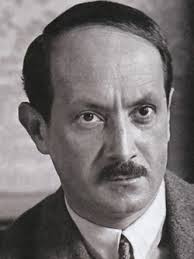
Jean PaulhanSaint-John PerseThe work of Saint-John Perse poses a precise enigma of which here is the first term: it is that Perse breaks with modern poetics, and the traditions that this poetics already imposed on us. Rimbaud and his children use a spasmodic expression, where the image derives its virtue less from the resemblance than from the contrast of the objects it brings together. Mallarmé, and his disciples, use a fragmentary and sporadic syntax, where the metaphor is enclosed in itself, as in a proverb, as in an island. From which follow (if they did not precede) loneliness and despair. It would seem that a piecemeal poetry is at every moment being driven out, and in despair, from the very path and condition of literature.
But Perse unites everything that modern poetry separated. There is not the slightest break in continuity in his poems. He uses less distant images than neighboring images; less solitary metaphors than comparisons and comparisons. The thousand tricks of rhyme, assonance and metagram, colons, parenthesis and dashes establish the community of objects that it offers us. No more than he leaves room in his soul for injustice or fear, there is no place in his speech which opens itself to disorder, incoherence or solitude.
Open old dictionaries. Poem means: “work in verse, harmonious and pleasant, of a certain extent”. However, the word has changed its meaning: nowadays it means rather: “work in prose, inharmonious, desperate, and (said Valéry after Baudelaire) rather brief”. But Perse restores a previous meaning to it. His work certainly escapes – by what means? – the common measure: it is thanks to a return to measures that are, perhaps, eternal – previous ones in any case. As if he had a lot to teach us about the condition of the poet and the nature of poetry.
This is the first term of the riddle, and here is the second:
This is because Perse does not renounce the various ambitions of modern poets – diverse, but curiously convergent. It requires poetry to be both a mode of knowledge and a way of life: the most fulfilled life, the most truthful knowledge. And certainly he combines beauty, but he does not make it his goal or even his reflection. Certainly it still combines pleasure. He readily says that the end of poetry is delight. But he never sought this delight for its own sake. Pleasure and beauty, it seems he encountered them by chance. He has no sooner mentioned the greeds, the passions and the grips of our heart – this greedy and darkened heart – than he strangely adds: “but we live from beyond death” (what beyond death?)”; and again: “our road stretches further” (what distances?)... “to what excess are we running?”. And: “the great sovereign step of the soul without den….”
Let the word soul not deceive us. It is among the holy ruins and crumbling of “old termite mounds” – it is, I think, about religions– that this step is being heard. “Great elders,” said Perse again, “you told me the word… the host is absent… God is blind…” But what did he see? Which route did he take? What experiment did he conduct? However, Perse cannot cheat. He neither dreams nor dreams, he has his feet on the ground, and his poem does not offer a detail that would not be easy to verify – to do this one would have to turn to the sociologist, the traveler, the botanist, the numismatist. He holds invisible causes in horror, having the precision of a scholar, as he has the rigor. In short, I can trust without reservation in what “a single, long sentence without caesura” teaches me, his poem.
We will recognize, in the studies and essays which follow, the various aspects of the enigma. We will also read there – where we will guess, I think – the solutions that it can receive.
Jean Paulhan
Introduction to the work of collective homage [Honor to Saint-John Perse] (http://www.gallimard.fr/Catalogue/GALLIMARD/Blanche/Honneur-a-Saint-John-Perse) published in 1965.
This book presented by Jean Paulhan groups together all the important texts that have been published about Saint-John Perse or his work: there are speeches, the texts of the prefaces to the different editions or translations of his books, special issues of magazines or newspapers. At the beginning of the collection, collective tributes to the poet and official testimonies are gathered, including the writer's presentation text at the time he received the Nobel Prize and its award.
The second part, which is the most important, is devoted to individual testimonies about the writer. Finally, the different episodes of Alexis Leger's diplomatic career are retraced using personal letters and newspaper articles.