Democracy appeals to the first comer
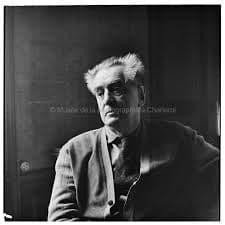
Jean PaulhanThe following text was published in the Nouvelle Revue Française of March 1, 1939
It is not the least curious effect of triumphant fascisms to be the worry into which they can throw a democracy dazzled by so much success, vaguely jealous, ready to put water in its popular wine and already convinced that it has sinned by excess of democracy.
But I would happily believe that she sinned by default.
*
* *
The secret of democracy
If I try to reduce democracy to its essential features, this is what I find:
It is first of all that the individual is better than the State, it is that society is made for man, not man for society. There is no shortage of sociologists who believe that nations have a soul. There is no shortage of unanimists who admit that each group is a god; nor realistic policies to hold that the bundle alone is moral, just, powerful. But democracy was invented against sociologists, against realistic politicians, and even against unanimity. Whatever the reason for our existence – what wonderful things can happen to us, what gives us the right to life, and sometimes to death – democracy at least knows where reason is placed, where the event is happening. In short, she gives herself the person, and the person is enough for her. This is the first point.
It is about any person, even if they have black or red skin, it is
the second point. Even if she were crippled, drunkard, perfidious. Because democracy is no less opposed to racism than to totalitarian regimes. She claims that there is a strange quality in man, such that man can never completely reject it (even in prison). The Bill of Rights says that men are born equal – which is easy to admit. She adds that they remain, which is more singular. But singularity is also part of the doctrine. Democracy has its mystery like a religion; and its secret, like poetry.
Here is the last aspect of this secret: it is that man is worth by what is natural, immediate, naive, rather than by what he acquires. A great scholar has merit: but a simple man is more precious and even more extraordinary than a great scholar.
If we want to build a bridge, a castle or a newspaper, we will be happy to find an architect, an engineer, a journalist. But to create a nation, we must first address the man who is neither a journalist nor an architect. To the man in the street, who can just as easily be a navvy or a four-season merchant, or nothing at all. Democracy appeals against the aristocrats, – and especially against the aristocrats of intelligence – to the first come. And we can clearly see the reason: it is that the first person to come has remained close to the essential. A linguist can spend his whole life researching the origin of language (he's wrong). An architect can be pursued even in his dreams by the haunting of a concert hall where one can clearly hear the concerts. But the man in the street has for him only the joys and the sorrows and the common accidents (and the accident, in particular, which was discussed above). He must be satisfied with it. He must be filled with it.
This is democracy. I'm not saying she's wise or reasonable. I don't want to convince anyone. Moreover, it is obvious that we are not in a democracy.
*
* *
Since everyone is happy
The events of September gave us a number of works and speeches, some of which are called It's Your Business, In Full Shame, You Will Wake Up Italians, and the others have no title at all. But these and those would be called even more accurately The shame of Munich seen through a temperament, or Munich and me, or better: This would not have happened if they had listened to me. Everyone agrees on this, without a reservation. Mr. Marcel Thiébaut patiently established in the Revue de Paris, with supporting texts, that there was not an event that had occurred over the past twenty years that the Count of Fels had not foreseen. But we knew it. We are all the Count of Fels. And MM. André Chaumeix, Henri Massis, Aragon, Mounier, Jean-Richard Bloch, Jean Schlumberger have established just as convincingly that there was no catastrophe that France would not have avoided, if it had followed the advice of the Revue des Deux-Mondes, the Revue Universelle, Commune, Europe, Esprit and even those (obviously more modest) of the N.R.F. If I cite the reviews, it is because they have time for reflection and remorse. But it goes without saying that the newspapers were even more satisfied with themselves.
I have no taste for irony and if I did, I would save irony for a better occasion. Because the fact is they all say the truth. This is an astonishing fact and I think we should be more concerned about it. In short, everything is happening as if France had never followed anyone's advice. Because there is not a single policy, which – firmly applied since 1920 – would not have saved us the shame of the last Munich, and that of the Munichs to come.
Charles Maurras, Bainville, Massis, wanted from 1917 to keep an imperial and strong Austria-Hungary, but a fragmented Germany, under guardianship under some government of our choice. This would have been an intelligent and wise policy. However, Herriot, Paul-Boncour, Jean Schlumberger held, from 1920, that the League of Nations must be given full moral and material authority; spontaneously erase certain injustices from the peace treaty; after having disarmed Germany, disarm ourselves, and finally prove that the Allies had not lied in declaring Peace to the world. This would have been an intelligent and just policy. So for the rest. Because Jules Romains, Flandin, Bergery admitted, in 1934, that it was necessary, by frankly accepting partial disarmament, to take Chancellor Hitler at his word, still respectful of the treaties. Why not? (It would have been reconciliation, perhaps lasting, with Germany). Léon Blum, Aragon, Jean-Richard Bloch argued, in 1935, that it was necessary to strangle in ten days, through merciless sanctions, the people who had just violated the freely accepted law. Either. (And the whole world would undoubtedly have approved of us). Finally, Maurice Thorez, Emmanuel Mounier, Julien Benda hoped, in 1936, that a sudden French intervention in Spain would save a friendly government from the fascist rebellion. GOOD. (It would probably have been the best protection of our border). And besides, neither the Italian alliance nor the embassy in Burgos were in themselves foolish projects. They would still have had to be applied.
From so many good intentions, not even one hell came of it. Hardly a swamp. Because the evidence is that it was necessary to take one of these choices – even the most mediocre one – and stick to it like a brute. We preferred to take them all at once weakly: humiliate Germany, but allow it to increase its strength tenfold. Grant Italy I don't know what hypocritical services, but openly hurt her. Pretending to support the League of Nations when we were making fun of it. Give Spain hidden aid, powerless to save it, sufficient to compromise us. Finally grant to powerful Germany everything that we refused to disarmed Germany. As if there were in these pledges given to everyone, in this false conciliation of parties, a constant tactic of our State.
If I talk about foreign policy, it's because the question is in the air. I would just as easily talk about the mud in the streets, and the birth rate. Our deputies and our ministers are honest people – and more than one big city is administered by bandits. Good town planners – and the interior of the French house is disgustingly ugly. Enthusiastic – and France has no parties.
There is no need to seriously ask what such conduct is worth, or whether it is sensible. She's stupid. But one might wonder whether it is democratic.
However, it is not. She is even the complete opposite.
*
* *
The prince of the mind, and the man in the street.
It has sometimes been admitted that in politics it is necessary to take into account all personal opinions; but it was in the Diet of Poland, which was composed of nobles, as everyone knows. There have always been philosophers who demonstrated that there was truth in each doctrine; but the man in the street has always thought that in all things there is a true opinion, and that the opposite opinion is false. The intellectual is a man who does very well without parties, and finds in cesspools a poetic charm; but the ordinary man draws the cake of kings, and likes to live in a clean room. The refined can delight in humiliation, and feel that he becomes better by it; but the man in the street is upset: he keeps (as they say) a dog from his female dog. The law professor gravely establishes in Le Temps that there is an implied part in every treaty, and that in 1938 we must betray the agreements of 1935, because the state of the world has changed. But the ordinary man simply tells himself that by letting go of a friend whom he has thrown into danger, he is behaving like a bastard.
In short, as soon as we are dealing with a baroque and manifestly absurd opinion, we can be sure that its author is some prince of thought. There were professors at the Collège de France to establish that wars came from cannon merchants (and undoubtedly, at other times, from bows, or oil merchants [1]). A great English thinker has tirelessly maintained, for thirty years, that war has never brought anything to anyone, and especially to the winner. (Mr. Aldous Huxley very recently joined this theory, which Mr. Jules Romains has continued to advocate.) It was the greatest economists, the honor of Europe, who proved around 1910 that hostilities could in no case in the future last more than two months, due to lack of money. And Mr. Léon Blum has always admitted that it would be enough to eliminate armies to end wars. So say men of genius. But the mason, the bus conductor and the local janitor have always known that a war is fought very well without money (and the economists manage afterwards) and that armies, nor even boiling oil or cannons are not the primary cause of wars. However, in a good democracy, it is the mason who should make the decision. No, with us everything happens between princes.
We know by what means. Of all the patient work that is accomplished in France in the committees and lodges, in the cells and groups, in the sections and sub-sections of our major parties - from this work from which come the investitures and the candidates, the deputies and senators, the votes of deputies and senators, the laws and even the conduct of our foreign policy, we can give all the praise: it is intelligent and tenacious work, studious and (most often) disinterested, subtle and universal. Which mobilizes billions of texts and documents. Which calls upon hundreds of thousands of men. Finally, we can say everything about it, except one thing. It is not democratic. He patiently raises and trains an aristocracy of knowledge, of wit, of eloquence. And God forbid I say the slightest bad thing about intelligence. It is necessary. We need scientists and technicians. I only believe - if at least I am a democrat - that where technicians and scientists are in dispute (as they are wont to do) the last word must go - rather than to a black-white agreement between specialists which apparently satisfies everyone, and harms everyone - to Arbitration, to the Arbitrator who is neither learned, nor astute, nor brilliant, nor particularly gifted of eloquence, neither strong in theme, nor champion of any sport. From one who does not hold his office from his dazzling merits, nor from his charm, nor from a plebiscite. First come, I'll come back to it.
*
* *
As for designating this first comer, that's another matter. We will think, to establish ideas, of these abstract deputies of whom Vigny spoke – who were not deputies of Niort or Romorantin, but simply deputies of France. Eight or ten would be enough. One would be enough.
[1] To boil