Letters Jean Paulhan - Georges Perros
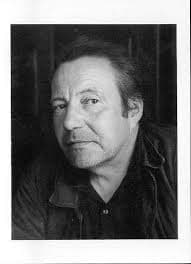
Jean PaulhanGeorges PerrosThese letters are taken from the correspondence Jean Paulhan - Georges Perros published by Claire Paulhan editions
Jean Paulhan to Georges Perros
dated: Tuesday [April 8, 1960]
Dear George,
Too bad if I bore you. I must try to tell you, roughly, what it is about. I've already said it once (it was at the end of the nrf version of Fleurs). Fortunately, no one paid attention. It would have seemed light. It was. But if I say it again tomorrow – I’m going to say it again – I think this time it will do the trick. Deep down I only believe in the truth. I believe in it fiercely. With fanaticism. Without the slightest humor. (the humor, if there is any, would only concern the means: exactly, the means of applying this "new" discourse of the method on which I have been working for sixty years? (Let me add universal – the new universal discourse. Why not? The Orientals here are not negligible.)
*
I. Here is what has always intrigued and irritated me: an ordinary gentleman makes a speech: preferably a popular speech (a little warm) in a popular assembly (a little agitated – but after all, the scene could just as well take place in a living room). Well, a good part of the audience will think: “All this is commonplaces, clichés, words-of-words” (as the other said). But another good part: “What beautiful feelings, what fair, sincere, well-founded thoughts!” But the message is the same for everyone. However, a commonplace is the opposite of a strong thought, a word is the opposite of an idea.
Imagine a hundred, a thousand similar examples. The most subtle analyzes will do nothing: there must be a place in our mind where the word is nothing other than thought, and the opposites are indifferent.
Nothing is impossible about that. This is what Nicholas of Cusa, Blake, Hölderlin, a hundred others, did not stop saying, on the one hand. And on the other: our mind can only observe falsely: by taking from itself the part that will observe it. So nothing stands in the way of an entire (and therefore invisible) mind being able to confuse opposites, moving in a sort of golden age where action is the dream, where the sky is the sea; and error, truth. But there is more:
II. Good. I admit – I cannot avoid admitting – that this sort of mind happens (if I use the vaguest word). I also admit – I can no longer avoid admitting – that we are not given to see him face to face. I also want to admit that it is to him that religions, metaphysics and even the so common, so effective haunting of some paradise, past or future golden age which gives to our reflection from Prometheus to Marx, and from Christ to Freud, its pole or its axis, allude. The fact remains that such evidence (if we can speak of evidence here) remains quite vague and inconsistent. It would be very surprising if an event of such gravity did not leave other imprints in our intelligence, other traces in our thinking.
And what traces is it likely to leave? I see four or five very clear ones. The first would be that when leaving this completely ideal place, where the spirit merges with matter, where hatred is no other than love, nor the place where I find myself different from Peru (Thus the mathematicians of the infinite number admit that the number 15 – for example – is also the number 340,000, or the number -15) Peru, love or matter will appear to me as fragments of the whole that they were just now. This is a first point, and here is the second:
They are fragments if you like, at least they are our fragments: we penetrate with them into the world given to us, this world is there, surrounds us from all sides, is violently, strongly present to us. This is a second trait, and here is the third.
This is because this world is no less arbitrary than it is present to us. No more than there is a single trait of light which makes us expect the color red or the color blue, there is no trait of universal confusion which can announce to us rather matter or rather spirit, rather hatred or rather love. In short, everything happens as if matter, spirit, death, hatred and the others, when they appear, had just created themselves.
Therefore, it is the arbitrariness, the presence, the fragment which has every chance of characterizing, upon its appearance, the world of identity and determination. These three characteristics imply a fourth: it is that our familiar world depends on another inconceivable world, from which it is both detached (fragment) and against which it asserts itself (presence) without this other world being sufficient to account for its nature (arbitrary). Let's call this new trait dependence. If I add that this dependence is exercised with regard to an unknown and unknowable number, in short, secret, it will seem that it is a very precisely religious or sacred dependence. (In truth, does it offer all the traits that we commonly recognize as sacred.)
III. I thought about it while reading your Rimbaud. Everything is there: the presence, the arbitrary, the sacred (you quickly have to talk about an "angel"). above all the rage for the fragment: for the crack, for the dismemberment, for changed levels, and for things disabused of being together.
But perhaps Rimbaud is a “case” (abnormal, extraordinary)? Either. Then take modern painting. Here it is obviously a common experience, quite invasive, unstoppable. But everything is there. There is not a modern painter who did not believe he held the key to the world (and life finally changed) in its shreds and cracks, perfectly arbitrary yes, but obvious – obvious like a sign, like a fair sign, which barely says one thing: “there is” and again: “there is”.
Here everything happens as if I had cut a mortise machine on one side, and a tenon machine on the other. Now the two machines suddenly start up, and will joyfully adhere to each other. Each tenon finds its mortise, each mortise its tenon. There is not a feature of modern painting (and of poetry and music as well) which does not denounce a passage from the Golden Age, from Eden, from the world of Unity. Conversely: this world must be real since it has such effects on us and leaves such traces in us. We are simply only able to approach it thanks to this projection that it makes in the world of Diversity and self-identity. (Thus the geometers of the fourth dimension are forced to study the things objects of hyperspace on the images they project.)
But here is what will perhaps be clearer: We sometimes complain that the metaphysical problem is obscure – but it is very clear, or insoluble – but it has been solved by all the metaphysicians who wanted to take the trouble. Even more curious thing: he always received the same solution. (All metaphysicians, said Jacobi – and repeats Renouvier – are Spinozists. Only the flourishes differ). And this solution is contained in seven words: essential unity and phenomenal diversity.
Finally, all that remains is to identify the links, the relationships, the interferences of this unity and this diversity. This is what we found ourselves doing (without looking for it.)
I return to my Speech[1] (to my Speech project). It would hold up quite well in three points, the first of which would be that the evidence, the clarity, the distinction, the presence, in short the various traits of the elements of which the world seems composed, are less given to us than we impose them by artifice on a world of perfect unity and confusion.
The second point would be that this world, secret as it is and hiding from our sight, is nonetheless felt and experienced by us. We go through him. Proof of this is in the marks and traces that it leaves on our reflection. And, in short, it is such that our thought is not distinct from the event, nor us from the world.
The last point would be that we must, in every approach, lead our thoughts in order from a chaos, and consider every object, or clear and distinct idea, for a fragment of this confused whole.
I will be told that this is what everyone knows more or less vaguely. Either. We still have to know that we know it. If you like it better, believe it.
If I haven't bored you too much. Friendship.
Jeans
*
* *
Georges Perros to Jean Paulhan
dated: [April 1960]
Dear Jean Paulhan,
If you intend to annoy me like this often, I'm your man. There is of course no question of responding to you; it would take several years of severe reflection for me to dare to do so. I will still try to tell you, with all sensibilities awakened, what I think I hear.
You are a man of deep patience, I have the impression that you delay as long as possible the terminology of your approach, which goes from the obscure to the clearly distinct. You understood, probably very young. Understood what. That we had to take off, that we now had enough information, from all sides, to try to start from the hand of man rather than that of God. That a certain location was over, that the substance-form problem was false. Poorly placed. That we were getting stuck in it. Valéry never quite got over it, his poetry suffers from it. (He didn't understand modern painting. Intelligence is a funny thing.) Then the war. This is very important. You spoke about it briefly, warily, with that appropriate urgency which ultimately characterizes you in all areas. The war, we made you do it.
You are not in a hurry but furious. This belief in the truth that you confess is declared in your work, barbed, if I dare say. You say: with violence, with fanaticism. yes, but I thought: furiously. Your face is furious. In joy or in overcome anguish. In the warmth of hello. In emotion.
Who spoke well of you? Joë Bousquet seemed close to the problem to me. The boredom perhaps comes from too many references. Lefebve, very serious, has the merit of having shed light on the poet Paulhan. Guérin is warm, a “psychologist”. It matters. Groethuysen intrigued. Let's leave Toesca aside. So happy with him.
So you quickly understood that writing was quite easy, quite boring, even, but hid something infinitely important. Hence your tireless curiosity as a reader. Any writing is likely to give you benchmarks, to facilitate your task; that it was necessary to change the order and combination of speeds, that the masses which agitate your thoughts like clouds disturb the sky, passed through a point of indifference at the heart of which every noisy superstitious poster was crushed. In short, Christianity, or any other religion, would be very good if so many people did not call themselves Christians without knowing what it is. It's vague. It's dangerously vague. So of course, the divine absence is better to look for, to experience, in a painting, in a poem, in a quartet. Things of man. She passes through there, like the light is colored passing through the shutters. Coloring is too much to say. She gets caught in the trap of the individual. Or don't dare breathe anymore.
Is painting [...] essential to you? Quite useful, I think. You use it. She demonstrates with “white” frenzy what you are trying to get across. To make you understand. The mystery is therefore there, rendered in its simplest expression, blinding. Does this mean that painting is closer to this mystery, today, like music, yesterday? Possible. But the word remains the word.
[...] So the mystery is there. Happy. I know you care about this term. Modest and joyful. The transfer of an absolute mystery onto a canvas, here is an object of reflection, an excellent projection – which gives thought, at the sensitive, flayed point where it is – adequate nourishment. Because the problem is, I think, equivalence. Allegorical. It is a question of knowing how to represent the nature of this tree, of this horse, of this man, other than by stupidly photographing it [...] so, yes, let us try to understand obliquely, falsely, provided that this bias, this falsehood, involves the greatest number of "palpable" elements, is directly linked to the most intense, burning with truth. This open situation – side by side – changes not the nature of the problems, but their place, calls them into question, removes the centers of major gravity, and allows, gives rise to, a multitude of new angles to explore scientifically, outside of any slippery terminology. It's about being difficult with the simple. To seek the common place of all thought, and the most interesting route, which is not always the shortest.
So there is an element of passion in your work. In your search. Like all truly passionate beings, sure of being on the right end, you take your time – Nurmi – you act distracted, you talk about something else. [...] None of your essential texts (why don't you collect your prefaces?) gives the sensation, although very finished, ordered, of being ready to print. We think you're going to rewatch all of this, from another angle, just to see if it will work better. I have no doubt, for my part, that this Discourse to which you allude, well, it is there in the process of being made, via modern Painting. Tell me if I'm wrong.
[...]
[1] This “speech” should have been the continuation of Flowers of Tarbes