The illusions of psychologists, by G. Sergi, 1905
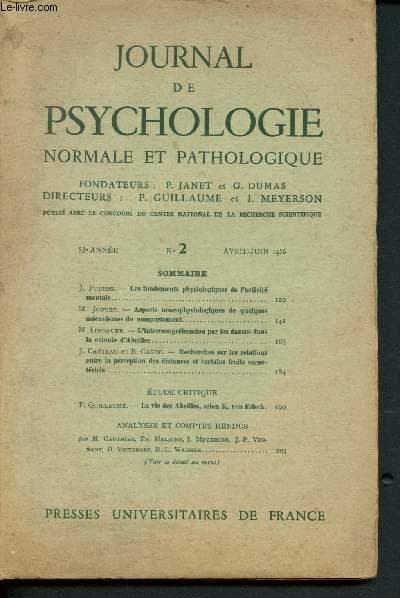
Jean PaulhanReading report published in the Journal of Normal and Pathological Psychology, Volume II, 1905, p. 248. See the original in Gallica
in: General studies, theories, methods, devices
(133) — The illusions of psychologists, by G. Sergi (Rome). Archives of psychology, t. IV, No. 14, November 1904.
A host of illusions are born, in psychology and psychiatry, from the meaning erroneous that scientists attribute to the words conscience and will. S. indicates and criticizes some of these illusions.
Consciousness is only the revelation of a psychic phenomenon; she is, therefore, neither a substance, nor a quality, nor even a state of mind, it is only the revealing form of the phenomenon, and its very presence is not always necessary. However, almost all psychologists consider mental facts as a necessary and permanent character. Sometimes we even treat it as an organizing activity of psychic facts. Another illusion of the same nature consists of considering consciousness as a special substance existing in itself, independent of the organism and whose individuality and autonomy would be given to us with the inner thought and feeling of our psychic facts. Now, this is absurd. The introspective method itself shows that the phenomena psychics do not have a character of activity attributable to the individual: a crowd of ideas or thoughts, representations of acts constantly arise passively within us, whether we like it or not.
It follows from this remark that when psychologists and psychiatrists assert that an individual has acted in full conscience because his reason is intact and their words normal, they commit an error of judgment; because this would amount to admitting that the act of thinking and other operations Similar intellectual activities are manifestations of conscious activity. Consciousness thus becomes an energy creating thought and reasoning. Now, if this were so, man would not only know in advance what he will think, but he would even create his thought when and how he pleases, which is absurd.
S. then moves on to the analysis of illusions which relate to the will. Both determinists and supporters of free will consider, in practice, volitional energy as an energy in itself. They lend both to the individual who has performed an action consciously, as if, before acting, he had known what he was going to do and as if he had determined to action by this volitional, autonomous, and conscious energy of herself.
There is only an illusion there. We only ever have as primordial forms of life action and reaction, sensation and movement. He sometimes the action is not immediately followed by reaction; the original feeling is then maintained, but always tends to act out. It's the case of desire. And all possible series of movements will not be when simple forms of reaction, or means for a more complex reaction under the persistent impulse of a tenacious desire or feeling. Nothing obliges us to introduce the notion of will here.
S. criticizes from this point of view the current conception of premeditation, control and restraint of our actions. He briefly condemns the theory inhibitory and voluntary nerve centers, incomprehensible if we wants to ban from psychology the entities that it has directly borrowed to ancient spiritualism.
Jean PAULHAN.