Introduction to Vailati
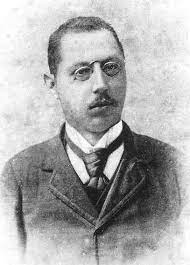
Jean PaulhanGiovanni VailatiThe following text includes the Introduction to Vailati, by Jean Paulhan, some Fragments by Giovanni Vailati, and some final remarks by Jean Paulhan on the unique advantage of etymological research. It appeared in the first issue of the Nouvelle Nouvelle Revue Française.
_There is a unique experience that we have all gone through. Here it is: we hear a sermon, a friend explains her political opinions to us, a friend shows us that we are really wrong to suspect her. We listen, and it happens that after five minutes, we experience a curious feeling: it is that the speech we are being given is perfectly linked, coherent, logical. And yet it is completely idiotic: logical, but absurd. An absurdity that is, as they say, obvious. No less obvious than a French or spelling error.
Vailati is the man who gave a little more attention to this experience than us.
*
_Experience indeed supposes that there exists, either below logic or beyond, an art of conducting thought, and precisely a _grammar_of ideas, exactly as there exists a grammar of words and sentences. No one can say that we have clear knowledge of this grammar of ideas. At least we are sufficiently aware of it to feel embarrassed and bristling every time she is violated.
Vailati devoted his life to trying to identify this kind of grammar, which Raymond Lulle and Locke before him had anticipated, and which Martin-Guelliot specified.
*
Should we call Vailati a philosopher? _It all depends on what we put under this word. Vailati was certainly not busy pursuing the secrets of heaven and earth. He did not want to build metaphysics or morality.
He assumed rather that philosophy modestly consists of recognizing, then specifying and sharpening the instruments, weights and measures, which our thinking uses every day. And, I would happily call his method metric, better than philosophy.
_Vailati again compared the philosopher to a grinder, busy ironing knives (which so quickly become dull or rust). Whether the knife should then be used by a surgeon to save his fellow man, or by an assassin to kill him, the grinder does not have the slightest concern.
*
Whatever task one wishes to assign to philosophy, or what sort of thinkers to decorate with the name of philosophers, _no one will say that such grinders are useless. Here is one of the most subtle and lightest I know.
_Vailati died in 1909, at the age of fifty. He had collaborated with Leonardo. _Papini and Calderoni were his friends. His studies were brought together in 1911 at Éditions Seeber in Florence. They have hardly been read. Imitated, even less so. Fresher than if they were from this morning.
Jean Paulhan
Fragments
The characteristic which most clearly distinguishes science from philosophy seems to me to be due to the fact that the task of the philosopher does not consist of making discoveries, but of preparing them, of provoking them, of making them happen, by contributing through analysis, criticism, discussion, to clearing the path which leads to them.
The case of Bacon, whose value as a man of science was almost zero, and who compared himself to the trumpet launching others, with his signal, into a fight in which he himself takes no part, is, in this respect, characteristic. And we can, in defense of Bacon and many other philosophers, cite, moreover, the peasant saying: the bell ringer does not follow the procession.
*
Among Galileo's handwritten notes, we find the following remark: “Amber, diamond and other very dense materials attract, when heated, light corpuscles, this because when they cool, they call in the air, which, like a gust of wind, carries the said corpuscles with it.”
Thus, by too great a desire to explain a strange fact, by bringing it back to more common facts, an observer of Galileo's valor misses the opportunity to analyze a phenomenon where a form of natural energy was manifested which was to remain ignored for two more centuries.
It would be difficult to find a better example to warn against the tendency to anticipate, by premature explanations, the careful observation of the facts.
*
By living in a society and in a given time, we find ourselves, outside of any personal membership, of any “social contract”, caught in a net of obligations that we would, most of the time, be incapable of justifying. Likewise, by the mere fact of speaking a language, we find ourselves forced to accept a number of classifications and distinctions, the basis of which we would be unable to indicate.
The situation of the man who aspires somewhat to grasp his own feelings and thoughts, and to express them accurately, is thus made difficult. We think of the sculptor confronted with a block of marble crossed by numerous deep veins unrelated to the form he intends to create. Each of his scissor strokes leads to unforeseen effects.
*
Reading the best dialogues of Plato – the Theaetetus, for example – one often experiences the impression of being frustrated of a definitive answer to the questions raised, whereas the controversy seemed to tend only to excite the desire to obtain one and to persuade of the insufficiency of all those which are successively proposed there. This is because in fact Plato's main intention is not to guide towards the definitive solution of the problems examined, but rather to put the reader in a position to seek these solutions on his own account, without preconceived ideas, after having freed himself from the obstacles which are the formulas and imprecise terms consecrated by ordinary language.
*
It often happens that one finds oneself forced, in formulating a question, to use terms which, independently of any intention on the part of the person questioning, lead the person being questioned to implicitly admit other questions as being resolved in advance.
To designate this type of question, the scholastics had a technical term: they called exponabilia all the requests to which one had, in controversies, the right to refuse to answer yes or no – for the reason that both a yes and a no would have conceded an essential point to the adversary.
When we are asked "whether we intend to begin to act honestly soon or whether it has been a long time since we have lied," we cannot answer affirmatively or negatively without recognizing that we are, or have been, in the first case dishonest, in the second case a liar.
*
[...] The metaphors due to the military profession are numerous. Thus the fact that the word explorer - etymologically one who goes to cry outside - ended up taking on its current meaning, finds its most natural explanation in a stratagem which the Ancients often resorted to during wars and sieges. Spies (exploratores) were sent to the enemy camp, supposedly as deserters, who, to better attract confidence, lamented very loudly and even showed (like Simon, in Troy, and, in Babylon, this Zopyrus of whom Herodotus speaks) the marks of the blows inflicted on them by their compatriots.
_May I add a remark here. A lot of nonsense has been said and written about etymology. It is still commonly held today that it gives us access to the authentic meaning, to the very reason of words. Now it is too obvious that this meaning, however far back in history we go, remains accidental, variable and precisely gratuitous. But it seems to me that Vailati, with great finesse, marks here the main, if not the only, advantage of etymological research: it frees us from the habits and manias of our language, and gives us the distance with regard to words which precisely allows us to distinguish the veins, which were in question.
J.P.