The mystery of criticism
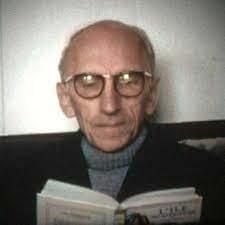
Maurice BlanchotNothing mysterious, it seems, in the criticism. Or at least its mystery seems very far from the enigma that we find, for example, in poetry. Strictly speaking, if we wanted to recognize a certain strangeness in it, it would be to be so complete in ignorance of what it is, of what it wants, of what it succeeds in doing, while it proceeds from everything which should make the mind clear to itself. That there are ten ways of hearing criticism, and more than a hundred of practicing it, we know if we have lost the desire to be surprised by it. In his Itinéraire français (editions du Pavois), Mr. Ramon Fernandez, who sees in Sainte-Beuve the model of the critic, would like to ask him his secret and he finds definitions of this kind: "A critic of Sainte-Beuve's stature... is endowed with a disposition to translate the vital order into intellectual order, through the intermediary of taste and the enjoyment it provides." Let's admit it. What is then singular, if criticism is indeed this ability to recognize living creation in order to transpose it into an order of ideas and images which makes it graspable, is the blindness of Sainte-Beuve in the face of creation in movement, that which is made and which, precisely, needs to be recognized, living creation par excellence, that of contemporaries: that Sainte-Beuve recognized neither Baudelaire, nor Balzac, nor Stendhal — not to speak of the Romantics — there is a strangeness there which can be explained by the taste for injustice or sentimental misadventures, but which perhaps also relates to another better-kept mystery. "If Sainte-Beuve," says R. Fernandez, a great critic, "has so missed the essential task of the critic which is not to call Baudelaire abnormal and La Chartreuse the work of a man of wit who tires of combining paradoxes, it is because the critic has a more secret secret than we would like to believe."
Until Jean Paulhan, we hardly noticed it. But from the Fleurs de Tarbes essay (recently published in Confluences) on Fénéon, we learn to identify and, in truth, to understand a mystery which puts criticism more beyond our reach than poetry or the novel. First, it is not certain that criticism exists. Even the 19th century, which was called the critical century, even the 20th where the greatest writers made their art a critical reflection on art, did not know, with certainty, the man who would represent criticism, as Mallarmé or Rimbaud represents poetry. For what ? We want to think that we can't know anything about it. Is it because the minds who take up the works to judge them are too diverse? Or strangers to each other? Or too confident in their uncertainty, or too lax in their firmness? Is it because they end up being wrong? This point is not lacking in evidence and it makes the condition of the critic quite unrewarding: of a poet we can never say (or prove) that he is wrong; but Sainte-Beuve is wrong; it falls into the category of error; he himself provides the proofs which cast doubt on whether he is indeed what he wants to be. In truth, Jean Paulhan only discovered a man capable of preferring Rimbaud, Mallarmé, Lautréamont, Charles Cros above all, and of distinguishing Gide, Proust, Valéry, Claudel above all. And yet this critic, so rare, even unique, this Félix Fénéon, almost disdains being a writer, as if the true nature of the critic obliged him to make himself invisible, to hide, to not be.
We are quite inclined to see literature as a sort of sacrifice. “We sacrifice the goods we abuse.” For example, we immolate the lamb to compensate for the abusive use — either mercantile or food — that we make of the entire flock; we doom ourselves to a limited destruction, but that the ritual act elevates to the highest price, the reality which we want to enjoy in an unlimited way. Literature, and more precisely poetry, appears as the sacrifice of language: it is or intends to be an immolation, the destruction of discourse; it wants to ruin the words that serve practical purposes and make them unusable. In literature it is language that is the victim, and the hope of the writer, like the belief of the sacrificer, is that at the moment when it is destroyed, the sacrificed thing—word or animal—can become the sacred; what disappears takes on an extreme value, breaks the particularities that define it, represents absolute sovereignty. Hence, perhaps, the ambiguity of attitude which we are surprised by among writers. They make life difficult for the words that they dedicate to destruction, and carrying, through this holocaust, they think of restoring to the words an inestimable value; they seem to have only one design: to annihilate language and they only seem to aim at one result: to restore language to its true nature, to give it existence. On the pyre of sacrifice, the substitution of the ram for Isaac not only signifies the right to live returned to the man who risked or offered his life, but also, a prefiguration of the lamb who will be God, it announces that the act of sacrifice has transformed the victim and, in place of the banal individual, has given birth to the sacred.
What is a critic? A poet, but who approaches poetry through non-being, in the sense that he does not want to be a poet, a novelist who participates in the secret of novelistic creation and who nevertheless says no to the novel. Could he therefore be the specialist who refuses to be a specialist in a genre, the one who knows, judges and is all things from the theater to the test? We said it, and that’s where we were probably wrong. Because the true critic, who is already a poet without being a poet, a novelist without writing a novel, still has the ambition of not being this specialist in non-specialty that the critic is. Inside poetry and yet outside it, he also wants to stay outside criticism and, if possible, exercise it through silence or in such a way that while writing we notice above all that he is not writing. Let's admit that the ambition is excessive. It is not forbidden to judge it to be full of meaning. If the writer, worried about the dangers of writing, is the sacrificer who protests against the abuse of words in practical language by devoting words to a destruction which is a revelation, if the poet does not rest until he denounces himself as a poet, if he initially considers himself suspect, having only anguish and fear in the face of the assurance that the easy and brilliant use of words gives him, it would be quite surprising if only the critic could be a writer in complete peace and understand, go through the whole range of letters without the shame of what he does and the constant desire for a little kill. We can clearly see what contempt attracts criticism which is not a challenge to itself, but a quiet exercise of excessive and vain power. In the past, during popular festivals, it happened that kings or chiefs were sacrificed in effigy to redeem, through an at least ideal sacrifice (sometimes bloody), the abuse that all sovereignty represents. The usual critic is a sovereign who escapes immolation, claims to exercise authority without atone for it and wants to be master of a kingdom which he disposes of without risk. So there is hardly a sovereign more contemptible and, for not having refused to be something, closer to being nothing.