Severe Healing, by Jean Paulhan
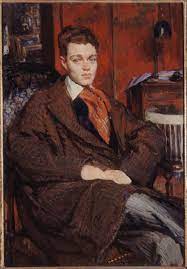
René CrevelFrom the slow motion movements seen on the screen, we suddenly understand that walking, jumping, dancing, raising our arms are acts, each of which marks the mystery that is the least easy to explain and yet the simplest.
The states and visions that Jean Paulhan presents to us in The Severe Healing (I am thinking especially of the patient's story, entitled Awkwardness in healing), sentences with precise contours give us a disturbing notion of their essential mystery. From moments that our laziness likes to believe are elusive, he, the opium of rhythm and disdained habit, has shown the existence of the most surprising reality that good health always sacrifices to some external and mediocre object. Thus, what he calls Awkwardness in healing oneself is perhaps in short only a resolution, by nature limited in time, not to abandon, before having gone around it, a world where thought, if, as Jean Paulhan says, it continues to remain the same as itself when the body changes so much, by the very fact that the body changes, reveals itself capable of some unsuspected and magnificent reign.
I talked about slow motion movements. But the story of the patient, and that of his wife who rushes to his bedside, by the grace of this magic that illness works within itself, are they not in truth, about a small fact (letters from another woman found in the patient's pocket, a ribbon too) frescoes animated by the most subtle thought! So I remember Jean Paulhan's response to the survey on suicide where he told us what men gain from being sick.
From the illness of Jacques (hero of The Severe Healing) is born the miracle which makes us consider spirits sometimes as communicating vessels, or even to believe that souls are all from the same continent, and only escape the common soul which brings them all together through particular peninsulas thrown here and there into an external sea!
Thus, through the letters discovered by the woman, the transfusion of thought takes place which better and faster than the transfusion of blood allows the patient to heal.
Convalescent and weak, he concludes:
The very impression that I received of my weakness was new, it was the impression of a weakness to be corrected - as I now felt, on another point and thanks to this admitted wrong, an unexpected authority.
_The very one that I envied Juliette when she did not discern in me a secret that was too rich or too heavy. But through despair, it seems to me that she now takes responsibility, in exchange, for my slowness, so many wasted ideas, the fault of which I severely experience today - and my first clumsiness against the ease with which we find ourselves dying.
(Les Feuilles libre, n° 39, April 1925 - Babylone, Pauvert, 1975)