Jean Paulhan and Gaëtan Picon, editors between tradition and transmission
Brigitte Ouvry-VialGaëtan PiconJean Paulhan
Close in time and the absolute nature of their respective biases for art and literature, Gaëtan Picon and Jean Paulhan each propose a method and criteria for reading and evaluating works. On the basis of a study of their proposals, we can, despite their differences in approach and intellectual practice, infer a common conception of editorial mediation: is it an ancient conception coming from the tradition of the book, as a comparison with the scholastic and humanist model of reading might suggest? Or a new method of transmitting works specific less to the era than to the personality of the two contemporaries?
In any case, from these two significant figures in the literary history of books and publishing, on the basis of a comparative study of their critical methods of evaluation, we propose to shed light on the function of the publisher and the nature of the editorial act in the 20th century.
Two editors and essayists
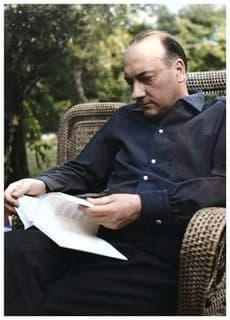
The choice of Jean Paulhan and Gaëtan Picon first responds to an objective reason - they belong to the same era -, which makes it possible to eliminate the contextual differences likely to interfere with the approach of their respective approaches. Certainly they are not quite of the same generation, Jean Paulhan, born in 1884, is almost 17 years older than Picon, born in 1901, but Paulhan died old, in 1968, without having really stopped working, while Gaëtan Picon died prematurely, in 1976, at the age of 61 when he was to replace Balthus at the head of the Villa Medici in Rome.
They therefore belong at a given moment to the same literary and artistic space in which they occupy different but also prominent places: Gaëtan Picon is presented as an essayist, literary critic and art critic, who was director of Editions de Mercure de France, founder in 1966 of the magazine l'Ephémère with André du Bouchet, Yves Bonnefoy, Louis René des Forêts, Michel Leiris and Paul Celan, co-responsible for the collection of Paths of Creation published by Albert Skira, but also and above all a public man "GrandCommis de l'Etat" responsible for the direction of Arts and letters alongside his friend André Malraux. There is no shortage of portraits of Jean Paulhan, which present him as the éminence grise of French letters, in particular through his function as director of the NRF — a French institution if ever there was one. He was its secretary, from 1925, succeeding Jacques Rivière alongside André Gide, but was also part, officially or unofficially, of numerous literary committees of influential journals, including Mesures, Commerce or publishing houses like Gallimard of course, like Le Mercure de France, bought by Gallimard in 1958, and which Gaëtan Picon directed from 1963 to 1965.
Evolving in the same sphere, they probably only interact in a polite manner, adopting different strategies and Jean Paulhan considered that Gaëtan Picon or Max Pol Fouchet who clung to the glory of Malraux to obtain office were more sensitive to the honors of the Republic than to the republic of letters. They have common friendships and admirations, Henri Michaux whom they both published, Georges Seféris, Saint John Perse, Noël Devaulx and many others, but also radically opposed tastes and judgments: Yves Bonnefoy, who from Of the movement and immobility of Douve in 1953, which Paulhan had not wanted, and if only until the death of Picon, published in the Mercure de France almost the bulk of his work [Hier reignant desert in 1958, L'Improbable in 1959, LaSecond Simplicity in 1961, Pierre Written in 1964, A Dream Made in Mantua, in 1967, Dans le lure du Seuil in 1975] was never published by Gallimard in with the exception of a few translations in Poésie Gallimard or in Folio. Paulhan did not consider him “a very great poet” as he confided to Ponge in a letter and this disavowal must have been significant enough for Bonnefoy to say, last June at the Picon conference, in response to a question: “I don’t like Paulhan”.
If Jean Paulhan's critical gaze seems to focus primarily on literature, then on painting, it would be rather the opposite for Gaëtan Picon, but this is a measure that a careful weighing of their respective contributions and support given to both arts would tend to put into perspective and the proof of this is that we saw, in February 1974, at the Grand Palais, an exhibition devoted to "Jean Paulhan through his painters" and in 1979, at the National Museum of Modern Art, an exhibition entitled “The double eye of Gaëtan Picon”.
Above all, they have in common that, in parallel with their activity as mediators, they have written critical works, essays on poetry and painting, stories which formalize their conception and their reading policy and, particularly, the critical anthologies of contemporary literature that both were keen to design and publish under their own names: Poètes d'Aujourd'hui by Jean Paulhan and Panorama de la nouvelle literature française by Gaëtan Picon, two companies including we will highlight the numerous overlaps or common choices, including in the special treatment reserved for the consecrated poets Aragon and Eluard. Through these writings, despite their differences and divergences of taste and choice, it seems that a sort of subtle kinship in the art of reading and transmitting could link these two great readers.
Criticism and editorial paratext
If we needed to be sure, Jean Paulhan and Gaëtan Picon would indeed confirm to us that the reading skill of the 20th century editor is linked to his mediating function and that it is critical. We are interested here in the case of the literary editor, the one who decides on the value of a text both in the state in which he receives it and in the state of added value in which he could find himself at the end of the editorial process. One also for whom the measurement and expression of this value are based on experience and personal reading criteria, but who is also and above all a passer-by. Gifted with memory and clairvoyance, capable of anticipating the reception of a text based on the sensitive, experienced reading he does of it, he is at the same time anxious to transmit what he reads and sees, as he reads and sees it.
But “things seen are things silenced”, while “this particular “intentionality” which constitutes the critical gaze, simultaneously derealizes subject and object”. This criticism of the criticism made by Michel Philippon in the name of Paul Valéry, whose specific approach he seeks to define, is that “having a critical eye supposes that one has broken the spell to explain it”, that “the critic, inspector and judge of finished works, is condemned to compare fossils, masks, closed and padlocked books. There, everything is given, but nothing appears any more.” What is opposed to Valéry's project which “is not to judge but to experience and to know. The judgment, if we stick to this word, can be of sensuality or technicality.” Here we find, in a contemporary of Paulhan and Picon, an influential critic and literary advisor with whom both had fraternal relations, common considerations.
Indeed, the writings and critical notes of J. Paulhan and G. Picon attest to an absence or deliberate suspension of “intentionality” of editorial reading, which constitutes its specificity even within the field of criticism. As with Valéry, judgment for them is, above all, an aesthetic experience conditioned by the tools and technical designs of editorial transmission but also “a sort of waking dream, a very labile semi-hypnotic state”, very mobile; knowledge is not excluded but does not translate into terms of erudition, it is rather a “completely objective measure of the difficulties overcome by the artist, by an exclusively professional professional capable of prioritizing merits and discerning virtuosities”. This is due to the fact that the role of the art and literature critic, as conceived and practiced by Valéry and - perhaps following him - Paulhan or Picon, consists of being interested not in the finished work but in the work in progress which "can allow us to see and decipher, through the succession of its stages, some of the secrets of this process, or even enlighten us on the true functions of art.”
Whether this conception of criticism by Jean Paulhan and Gaëtan Picon was inspired by Valéry or whether it results from an objective observation of the reading situations with which their respective editorial practices confront them, the fact remains that the function and role of the editor, in their eyes, consist of being interested not in the results but in the processes, in the avenues of meaning, in the forms identified in the text which is not finished but still in progress, in the means which support them, in their possible effects on the reader. Starobinsky, regarding Picon, thus speaks of a “complete criticism, — because it concerns itself with all the points of the journey where the living relationship passes which, through and in the work, connects author and reader, writer and public”. This effect on the reader is the instrument for measuring the value of the work, and this is what the editorial reading practiced by Gaëtan Picon is, because it seeks to “experience [the] elements of the total value” is a critique of genesis which evaluates but does not however make a value judgment: "Instead of a criticism which, ultimately, would reduce the work to the sum of its causes, Picon proposes a differential approach which, turning towards the world from which the work has detached itself, evaluates the force of rupture, the power of negation"…
We can then speak of editorial judgment on the condition of admitting a non-radical practice or meaning: “The judgment” says Picon, “is not a decree, but a recognition: to criticize is to recognize the presence (or absence) of a value in the work.” We can also qualify as pragmatic this specific conception of editorial judgment which depends - like any element of the paratext as defined by Genette, on the very characteristics of the communication situation in which it is rendered, on the nature of the recipient of the work, and here it is the editor who concerns us. Under the title of “the illocutionary force of his message” as “a pragmatic characteristic of the paratext”, Genette cites “making known an intention, or an authorial and/or editorial interpretation” and gives the example of prefaces, indications of genres, but also advice or reading injunction which “also clearly indicate, although implicitly, the judicious capacity of the paratext”. In addition to the transition from intention to editorial interpretation_, a nuance which takes up the situation, mentioned above, of moderation or necessary displacement of critical intentionality, we will retain the notion of “jussive capacity” which tempers the prescriptive aspect of the judgment transmitted and emphasizes “the functional aspect” editorial paratext.
The editor-critic would therefore rather be the one who reflects on his judgment and makes sure to make the value of the text visible and readable in the book. This is the pragmatic role of the editorial paratext, “defined by the characteristics of its instance, or situation, of communication”: Unlike literary criticism which involves the production of a discourse on the object of its reading, editorial criticism aims for an adhesion to the text which results from a prior questioning: “The work is not all authority” writes Picon, “she can only reveal her authority in the presence of a conscience which has first weighed on her with all its weight.” The editor is this conscience which, recognizing the value of a work, reinforces its authority. But he does not claim universality, any more than his judgment is translated into judgments; his criticism occurs and produces silence: silence of cursive reading, silence of global contemplation of the text considered as a painting, inscription of this silence in the editorial peritext, the non-verbal, material form of the book which is also anticipation - through the editorial paratext, which encompasses all the elements of presentation of the text - layout, typography, blanks..., of the silent reading of the reader to come.
Editorial reception - that is to say the combined operation of reading and publishing the text which leads to providing the overall paratext with the specific peri- and paratextual contributions of the editor and an edition - is a process of grasping, listening and knowing which takes into account both the intention expressed by the author and the appropriation that the reader can make of it. But because “there is no understanding of a piece of writing, whatever it may be, that does not depend in part on the forms in which it reaches its reader” and that the publisher is aware of this determination, of the responsibility incumbent on him, as well as of the impact of his work of adaptation to the supposed needs and skills of readers, he adopts a middle and mobile critical position: he is neither limited to accompanying, in a utopian perspective of objectivity, the intention of the author, nor to reacting, to deciding with a radical judgment but aims to find and reproduce the conditions for the possible reading of the work.
The conditions of good judgment
Both Jean Paulhan and Gaëtan Picon demonstrate a critical consciousness which inevitably and necessarily implies a judgment: “The act by which we react to the work of art is equivocal and complex – so much so that it is impossible to give it a name on which everyone agrees. But this act, if it is not reduced to it, includes the judgment” writes Gaëtan Picon, while Paulhan declares: “I could very well have started these reflections with something: “To criticize, as the root krinein indicates, is first to judge…” Or, further:
Both invalidate the various attempts at critical judgments which either observe without judging, or judge gratuitously, such as for Paulhan “the arts and sciences of language”: sometimes infinitely rich in methods and observations, but powerless to judge. Sometimes cutting haphazardly, and as if in ignorance, while for Picon: “Alongside the one who sees nothing, because he only knows how to identify and reduce, there is the one who sees without pronouncing”. Both establish typologies of critical errors: Picon analyzes at length their philosophical as well as psychological dimensions, while Paulhan, who seems amused by the exercise, draws up synoptic tables. He concludes one of them by saying: “Moreover, explanations and comments are most often ingenious and subtle, and have only one fault: they pass over the essential in silence.” Echoing Paulhan's remarks, Gaëtan Picon, in The Writer and His Shadow, specifies: “We understand the current prudence of criticism. Such constant misunderstanding - on the part of intelligences whose distinction is not in question - reveals, it seems, a fundamental impossibility: to judge is always to misunderstand the new (particular, incomparable) work, since it is to see it through a tradition”.
The term, although not used here in its absolute sense, designates both the critical tradition (as “collective consciousness: the memory of what has been, with the duty to transmit and enrich it”) and a tradition, a singular critical practice with the symbolic forms, the literary hierarchies that it favors. But because the critical consciousness of the editor is first of all awareness of the specific context in which his reception of the work is located, to tradition as heritage and transmission of “cultural content through history from a founding event or an immemorial past”, he prefers mediation, the transmission in the space and time of a given era, his own. We will emphasize here, without dwelling on it, the importance of the notion of current events which is at the heart of the editorial approach and practice of Jean Paulhan and Gaëtan Picon and to which many of their writings or works attest: Paulhan insists on the need to appreciate and discover writers during their lifetime, to be “uncritical of the present time”. The very word topical constantly recurs in Picon: in the warning for the first edition (1949) of the Panorama of new French literature, in “Literature twenty years later”, foreword to the revised edition (1976), of the same work, in a 1975 interview where he declared that “criticism has been topical criticism for me” he specifies that the choice of this “topical context” aims to “bring a work closer to an audience, or justify my own immediate reaction”. What does the term topical mean?: “A certain moment in literature, the one that we are currently experiencing, and that this book intends to make known and define”, the literature “of the day”, “in the process of being made”.
Jean Starobinski insists on this choice of the present time, of the current era both in his preface and in "Le Critique", emphasizing on multiple occasions that "panoramic understanding, which is for Picon a constant imperative [...] the way in which Gaëtan Picon responded to the challenges of his time", "closely combines the retrospective vision and the synchronic overview of the networks where the avenues of our time [and] that he stubbornly returns to the current world.” In doing so, he notices the close link in Picon, between the demand for criticism of the contemporary and the very nature of non-traditionalist judgment:
And Picon, opponent of the ease of “judgment in museums” “true nature” of the aesthetic experience discovered “in contact with the new work”, congratulates himself, “without excessive authorial vanity”, in the foreword to the 1976 edition of Panorama, of the validity of his 1949 judgments:
To these explicit conditions of good judgment, we must add one, which undoubtedly constitutes the strength of these two conceptions and practices of editorial reading, while remaining implicit, but which two writers, closely linked to their respective publishers, suggest to us:
On the one hand, Henri Michaux, in his posthumous tribute to Jean Paulhan, writes: “To the other, face to face, without opposing, without returning to himself, without apparently needing it, without “me”, with enthusiasm, restraint, astuteness, he penetrated into the mystery opposite...
On the other hand, Yves Bonnefoy uses the same expression — “without me” — to describe in Gaëtan Picon this excess of worry or, on the contrary, of personality which made him abandon himself to empty moments or to the plurality of availabilities, encouraged him to be nobody, an experience Bonnefoy says “which kept Picon from being able to establish himself in writing poetry even though it was an experience of poetry”. Many commentators (Ionesco, Claude Simon, Ponge, Starobinski) who perceive in Picon an alliance - or a tearing? - between the desire for personal work and the need to go through a dialogical reading or criticism to better get closer to himself.
At least as numerous also, the comments which underline Paulhan's concern for self-effacement, his attention to the other "with implacable vigilance", his capacity to adhere to the writing of the other, to abstract himself from oneself in order to discover and make others discover, in an attempt, says Michaux, "the discovery [...] of a latent thought, common, still to no one, in suspense, and which he also did not want to make decidedly his.”
In his will and his intimate desire to make the aesthetic experience communicable, “to achieve, if not a universality, at least an objectivity of taste”, the literary editor, like Paulhan, like Picon, does not say “I” or if he says it, it’s not him speaking. Against the criticisms that Paulhan caricatures and whose bad relationship with others he denounces by distinguishing the one who does not come out of himself - the one who "summons the writers in turn before his Tribunal", the one who "begins by laying the author on the bed of his little (or large) personal philosophy [....], from the one who does not come out of others - whether he is a historian, psychoanalyst or sociologist, the I of the editor is always a multiple, the author, the reader, himself. If he is “without me” it is less the result of infirmity, of an absence, than of flexibility, of a surplus of presence. “This voice,” writes Gaëtan Picon, “slow to pronounce, but sovereign, is that of an I transcending knowledge and sensitivity, transcending reason, transcending myself: an I who is one with a meditated experience of art.”
So, were we to remain with a hypothesis, we can suppose that this “without Me”, attested ferment of the art of reading of Jean Paulhan and Gaëtan Picon, could be a necessary condition for any true editorial reception?
The experience of the work
A critical as well as an aesthetic experience, editorial reading involves a method and criteria for expressing the taste one has or does not have for a work, whether admirable or mediocre. And if the concern for new reading and not ossified by tradition, the attentive identification of the present which “thus scrutinized, immediately directs the gaze towards the future”, and the withdrawal of the Self are, for Paulhan and for Picon, the conditions of good judgment, what is then the nature of this good judgment, of which the two critical editors would be the representatives? The one which would emanate according to Jean Paulhan “from an elementary criticism”, which “pronounces that a literary work deserves, or not, to be taken into consideration; “exists” or does not exist; in short, is good or bad”, a definition which has its counterpart in Picon: “To say of a book that it does not exist means that it is not literature and therefore that it is worth nothing”. The notion of existence is for both a criterion of value and hierarchical place in the order of art. “Likewise” writes Picon, “that belonging to this order makes the work cross the absolute threshold which separates the non-existent from the existing, the degree of its belonging - its place in this whole - makes it cross the differential threshold which distinguishes the work from the masterpiece, the second-tier book from the first-rate book”.
This value is linked to the quality and conscience of the person who states it, “competent witness” according to Picon, who differentiates between the authentic and the inauthentic, who loves a work “after having submitted it to him [us] ourselves, kept at a distance”, “simple reader” that Paulhan says he remained “with a lot of strength” despite “particular weaknesses” of “bias” magazine director that he has long been, “attentive reader” he also says and emphasizes that “Criticism is one of the names of attention”. Picon underlines this necessary attention to the validity of the judgment even in the case of contrary opinions.
Against the weakness of a traditionalist criticism, the insufficiency of an militant criticism, of a laxist criticism, of an explanatory, or technical criticism, or even of an aesthetic criticism "against all odds", the good critic is therefore above all a reader, a basic reader but a sensitive reader who knows how to remain outside, does not seek to understand everything but exposes oneself, takes risks.
“The exteriority of judgment” says Picon, “respects the work better than the interiority of understanding”. It is a “complex and unequaled experience, which is an emotion of knowledge, total activity of the mind and movement of sensitivity under the flash of a revelation? It is a revealing emotion (and works which are nothing, precisely, reveal nothing) […]in a light which implies and arouses the intervention of the mind: no less than our “taste”, our position in time, our knowledge of other works, our faculty of confronting and valuing. […] What I call judging — or admiring — is saying nothing unless exposed to this power.”
In the same way, Paulhan who is concerned to know what “the man in the street” wants and expects poetry, tells us that he “accepts being surprised and captivated by mystery, rather than directing or planning it. […] He does not seek in the least to understand it, nor to dissect it. And everything happens as if the specialist in poetry — as soon as he begins to construct his explanations and his dreams — becomes a heretic, but the common man deep down remains perfectly orthodox.
The common point between Paulhan and Picon lies precisely in the acceptance of a “mysterious and pressing logic” which grants works of art and which asks of those who seek to understand them, ordinary readers or experienced critics, an aesthetic consciousness that is both universal and individual, acquired knowledge and new discovery, “made of all past aesthetics and our own, of the meaning of all authentic forms and their irreducible difference […] consciousness which, at each moment, is constituted, which only exists in action and never in definitive formulas”.
“The secret of the novelist’s tête-à-tête with the reader. This silence! The same condensed silence as that of painting, the beautiful paintings, I hear them being silent.” This “condensed silence” that the editor understands, like any reader, places it at the intersection of two ideal critiques evoked on the one hand by Valéry - " Criticism, insofar as it is not reduced to opining according to one's mood and tastes, - that is to say, talking about oneself while dreaming that it is talking about a work, - criticism, insofar as it judges, would consist of a comparison of what the author intended to do with this that he actually does”—on the other by Paulhan and Picon who, without dismissing the author, do not recognize his intention as a sufficient criterion of evaluation and claim a conscience “capable of hostility and determined to judge” even when she reacts with silence. Picon declares: “If submission and silence are perhaps the ultimate reactions of the mind in the face of the authentic, this silence only has meaning because it follows a word, this adhesion of value only because it closes a questioning”. Mutism is proof of the concrete perception of the work but not an evaluation in itself: “I can, while seeing, refuse to pronounce myself. I can also, while seeing, speak out against what I see, reject what has just been revealed.” While Paulhan sees in Félix Fénéon the ideal critic “amazed by the canvas, and as if forbidden”, capable of blushing in front of a painting, of saying nothing, that is also to say of not signing his critiques so as not to use his own language against that of the work.
If we can thus establish bridges and equivalences between the critical positions of Picon and Paulhan, it is because they meet on the limit of the technical tools for apprehension of a work whose good evaluation is based above all on a demanding, “identical” consciousness. according to Picon “to an intelligent experience of art”, “an order of privileged observations” says Paulhan, who distrusts specialization and rules. On the one hand, Paulhan advises “the lost man”: “Don’t think so much about your book. The rules were invented so that we forget the subject. Masterpieces are made in reverse. Now for serious business. See you tomorrow for poetry.”, on the other Picon declares: “Technical knowledge neither completes nor constitutes the experience of the work of art.” which [The lived experience of value] “cannot be replaced or even expressed by intellectual arguments”.
Liking validly
Where then would the feeling and expression of value come from? “Love validly” says Gaëtan Picon, “it’s not just seeing, but judging that we are right to like what we see” and “the valid work, in this respect “is not that which is the object of erotic knowledge, but that which resists judgment”. He explains: “I do not say: “I like this work because it responds to a truth of art”, but I do not say either: “I like this work because I love it.” I say: “I love this work because its value reveals itself and resists, when we place it in the light of what a thoughtful experience of art reveals as value.”
We find in Paulhan's editor's correspondence with his authors, in his comments or reactions to the texts sent to him, as in echoing the words of Gaëtan Picon, this measure of value which results from an almost physical confrontation with the work, from a balance of power between adhesion and difficulty, from a resistance of the work but also from a reading which is more a battle of love than intellectual criticism. As in these few letters to Michaux. About the Phenomenon of painting, he writes:
Or again (early 1953):
The notion of necessary confrontation of spontaneous feeling with a broader experience of literature is also affirmed, as in these letters to Audiberti:
Or again in 1964:
It would be appropriate to devote a separate and in-depth study to the emotional vocabulary that Paulhan and Picon use in their critical comments, in such a recurrent, natural and at the same time so rigorous way that we can speak of a system of “affective criticism” at Paulhan and an “erotics of reading” review at Picon. If Starobinski emphasizes that “what matters for Gaëtan Picon is art, literature in their relationship with the expectations of the heart” and salutes the courage of those who do not hesitate to write this word, the reader of today's literary chronicles, accustomed to criticism which is certainly exclusively laudatory but above all descriptive and rationalizing, may judge this desire to seek for a reading the source of the affect, of the pleasure it provides and the almost emphatic expression of its intensity, as outdated or out of place.
However, we are dealing here with intellectual tools for evaluating the work whose relevance remains intact when we relate them to their objective which is to support and respond to the curiosity of the readers of an era for the writers of their time with the same means as these readers. Any publisher of “literature in the making” is aimed at a public whose desire - apparently simple - is to love a work that they find beautiful without having to resort to prior explanations on the reasons which push them to love it and on the nature of this beauty.
Whether it is for him to contribute to the constitution of canons or more simply to put in a position to be read authors considered valid, the editor seeks to evaluate the work, to choose it or reject it, by reproducing the very conditions of this public reading, by becoming the fair and as objective interpreter as possible of the multiplicity of possible sensitivities. Including those that differ from his own. Thus, “Gaëtan Picon dared to declare: “I do not feel at home in the works of Artaud, I do not feel at home in the works of Bataille, where there is something too strong and too black […] “Yet, in the Panorama, Bataille and especially Artaud do not appear as less appreciated authors; they are fully recognized”
Same attitude with Paulhan, which could be illustrated by a reading note of Marcel Moré's book, in which Paulhan dismantles one by one, in a very argued and sometimes vehement way, the problems of the book, to conclude at the end that this book will probably be a great success. Suffice it to say that for Gaëtan Picon as for Jean Paulhan, to love a work is to recognize that it responds to a necessity and it is in these terms that Paulhan expresses himself in a letter to Leiris from 1955 about Fourbis: “You know — or you must imagine — how much I love it (or rather how much it is to me). necessary". But this necessity of the work - which cannot not be - constitutes an assessment that is less psychological or philosophical than more broadly fiduciary of the work, that is to say based on the trust placed in the person, author, publisher, who issues it.
Jean Paulhan and Gaëtan Picon would therefore illustrate this “loving reader”, spontaneous, instinctive but also informed and experienced whose “virtue of discovery and communication is first and foremost that of “immediate criticism”: that of a first conquered reader, eager to share as quickly as possible the admiration he has felt”.
The sufficient reader
In a communication at the Gaëtan Picon conference in June 2005 at the Center Georges Pompidou, Francis Marmande suggested that Gaëtan Picon thus embodies this “sufficient reader” of which Montaigne dreams in chapter 24 of the Essais, that is to say the reader capable of discovering, of releasing a perspective on the basis of an own idea of creation, a satisfying reader who expresses his opinion on the interest and the contribution of his readings at the same time - and perhaps also because they satisfy him, soothe him. Someone for whom reading is a technique, but also a free act which takes into account the realities of the work and creates connections. The reader deciphers the work and his job consists of taking charge of the intention of the work, of basing his judgment on the basis of a concrete, immediate grasp, suspended emotion, in which the shock of the revelation and the distance of the reasoned explanation merge.
Here we see summarized Picon's method of editorial reading, a dialectical method made of back and forth, of instantaneous internal debate, where criticism coincides with the time and rhythm of the reading:
And Paulhan practices an analogous reading, dissecting the work but, paradoxically, refusing to decide at the end of a developed and attentive analysis or deciding in the opposite direction to that to which his demonstration seemed to lead.
Both are invested with the role of discoverer of new works whose secret it is up to them to unravel or reveal. “Secret” of the work, a secret without which there is no work, the term comes up very often with both, but both approach the resolution of the secret very differently: with Gaëtan Picon, the secret appears as a sort of rite of passage and installation in the intimacy of the work, as also the issue of an almost Promethean mission of reading; For Paulhan it takes the form of an enigma to be solved, a methodical starting point for a conquest of the work through logical, scholarly, reasonable knowledge which Paulhan then notes that it aggravates the mystery instead of dissipating it and from which he gradually stands out.
To present these two very different methods in a synthetic way, we can compare the essays that both devoted, almost at the same time, to Saint John Persia: “Homage to Saint John Persia” by Picon appeared in 1960 in L’Usage de la lecture and Enigmes de Perse by Paulhan dates from 1962-1963. “Homage to Saint John Perse” begins with such a fusion of the critical text with the work, or adhesion of one to the other, that one would believe that one is reading a prosopopeia, as if the critical text emanated from the poetry or that it was given to be heard through it:
Paulhan does not seek to access the sacred character of the secret but to “detect the secret”. Beginning his essay with: “The work of Saint John Perse poses a very precise enigma that I will try to resolve”, he specifies:
In reality, a careful study of the two texts allows us to conclude that both demonstrate the same accuracy and arrive at the same conclusions on many points. Because what counts, precisely, is this accuracy of gaze, we are struck that they achieve this by methods that are the opposite of each other: — Picon's reading is a sort of body to body which embraces the text, while Paulhan starts from a grammatical analysis at a distance. - One emerges in stages from the matrix of the work to gradually ensure its revelation as if by metamorphosis, the other by an inverse movement, denounces one after the other the laws of language that she had given herself as guideposts and uses them as a prism to identify as closely as possible the diffraction, the specific deviation of the work which escapes these laws and imposes its own. - One presents the critic as someone who “reads works to love them” and does not read just any, the other as an observer “who has an obvious advantage over the scientist of nature”, which is that the objects he observes are “ours”. - Nevertheless, both agree that “nothing should prevail against the reality of this experience” what reading is, as they practice it, an experience of reinvention says Paulhan, while Picon declares: “Of the open life of the work, ultimately, nothing testifies better than the simplest approach: the open life of a reading.”
Modern humanists
Jean Paulhan and Gaëtan Picon would therefore be two Sufficient readers, whose act, so “partial, partial, precarious, unfinished” whatever it is, is founded in a “moment of truth” “before totalizing and aesthetic criticism” “where the experience of the work is accomplished.” Can we therefore, by extension, qualify them as humanists? Yes, to the extent that they are aware of the nature and critical value of the act of reading that they perform, they also feel the need to clarify their personal method in their respective notes, essays and correspondence. Quotations, comparisons, comparisons, we find in them a specific disposition to that which Jacqueline Hamesse points out for the scholastic era, i.e. a radical renewal of the very conception of the act of reading which goes hand in hand with the new objective of discussion, of dialogue, of "generalized transmission of written culture and that of the selection of works to read". Gaëtan Picon and Jean Paulhan, like their predecessors even before the Renaissance, noted that “literary efflorescence […] made access to books more complicated” and that for the reader as for the intellectual of the time the problem arises of “dominating the entire production and [of] keeping abreast of new publications.” Gaëtan Picon says nothing else when he describes the Panorama project as “a presentation of works linked to the trends which govern our current affairs and decide the immediate future”, as “a guide […] the (certainly adventurous) topography of the ground on which we walk” to respond to “a literature lover [who] asks us to establish a reading program: What books will we recommend to him? And in what terms will we report to him on the changes that have occurred?
We can clearly see how the editorial posture which supposes giving information in present time and space while establishing relationships with the past, or with other present situations, and reinforcing an intellectual and sensitive community, leads the publisher to combine the functions of communication and transmission, without however erasing the differences between them precisely established by Régis Debray:
Humanists too, those whose value of the gloss, like editorial choices, is due to the concern to expose the tools and the rules which governed it, to question the value of value, “to pose the problem of evaluation” and renew the approach to books by trying to “cross the screen that the old critical apparatus established between the text and the reader”.
In this, Paulhan and Picon even take up, for their time, “a commonplace of humanist polemic”. But what is interesting, and deeply humanist, is that they do it not to establish their own authority but to share convictions with a community of readers who are like them. They agree with this attitude common to all those who were involved in the book trade during the Renaissance: "Seller and buyer agreed that the book trade was an important and quality activity, a theatrical transaction, both culturally and financially, which required from both parties the same level of taste and skill as the act of writing."
Indeed, we cannot overemphasize the importance given by Paulhan and Picon to their activity as readers and publishers of literature, to the seriousness that it requires, to the pleasure that one derives from it and to the necessity to which their essays demonstrate to explain the issues, both aesthetic and philosophical. The Flowers of Tarbes on the one hand, The Use of reading or the Writer and his shadow, on the other, to name but a few, attest to an individual quest for truth, a search for knowledge of oneself and the world through the commented reading of the work which is an experience of intersubjectivity: “To be as close as possible to the work is to remain in this zone of animation where our life responds to his, where his life responds to ours.” Both, in the name of this intersubjectivity, of this sharing with the author, of the taste and competence of the act of writing, reject criticism as the progressive execution of a project because the idea of the work for them does not precede its execution, because the work, they are well placed to know, is not reducible to the consciousness that the creator has of it, it follows paths of chance. The reading therefore opens on an empty space, the reader deciphers this work which is searching. The encounter with the work is face to face and the modern humanist publisher of whom Jean Paulhan and Gaëtan Picon are icons is a reader who questions less about the value of the text itself than about that of the experience he has had of it and, through the published work, transmits it to the reader who is also eager for encounters, present and future.
Brigitte Ouvry-Vial, University of Reims