Interview with Roger Grenier, on Jean Paulhan
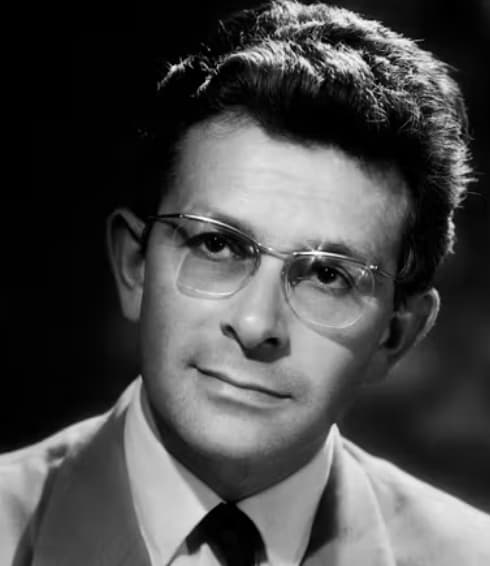
Roger GrenierITW: Roger Grenier, you were born in 1919, you are a novelist, writer, screenwriter for TV and cinema, member of the reading committee at Gallimard. You are best known to the general public for The Winter Palace, in 1965, the film novel which won you the Fémina prize in 1972. For several years, you have published memories with a very particular tone, whether it is Fidèle au poste, Les Larmes du lit, or even this wonderful book that you dedicated to your friend Pascal Pia in 1989. Thank you for agreeing to talk to us today about Jean Paulhan, whom you knew best, I believe, in the last four years of his life, that is to say from 1964 to 1968. Do you remember precisely the circumstances of your first meeting?
RG: Oh it was at Gallimard, it's not a very big house geographically. As soon as I entered Gallimard, inevitably, I came across Jean Paulhan, who was very courteous, very friendly. I had never been to these famous meetings once a week in his office to laugh at his jokes and court him a little, like many others. Absolutely never. Because I found that these were literal morals from another time.
That was my reservation. But during the four years we lived together at Gallimard, I had very courteous relations and... And on the other hand, I still admired many of the things he wrote and in particular his correspondence. So, a rather curious thing happened, which was that... Well, at that time, he was at odds with Gaston Gallimard, as we know.
They didn't speak anymore because Gaston... was that the bottom of the story or was it a pretext? He considered that Jean Paulhan's entry into the Academy was a betrayal. So they no longer spoke to each other. So that when Jean Paulhan had something to say to Gaston, he said it to me so that I would repeat it to Gaston. I remember once, he said to me: You know, there is Gaston Gallimard, who must have received a manuscript from someone who, in the past, rendered a great service to the house. I don't know if it was someone who had prevented... or saved the house before the war... I don't remember under what circumstances. So, we should still point this out to him... I went to find Gaston, then I said to him: “You know, you have this manuscript. Paulhan says he is someone who has done you a very good service. Perhaps this should be taken into account.” And then, he answers me, that was all him: But since I'm estranged from Paulhan, it doesn't matter.
ITW: It is still surprising that, since you were an author at Gallimard since 1949, since your first essay, your first book, The Role of the Accused, you have never been in contact with Paulhan.
RG: Absolutely never. I never again contributed a text to the magazine, except perhaps also on the occasion of the death of... Camus. From Camus, yes, then from whom? From Jean Grenier, perhaps.
ITW: What did Jean Paulhan mean to you? You've been reading it in the NRF for a long time.
RG: Of course, yes. I would especially like to say that after the disappearance of Jean Paulhan, I always heard about him from someone I loved very much who was Dominique Aury. Obviously, it was her god, Jean-Paulhan, but she spoke about it very well and it was from her that I heard the most about it.
ITW: So, you were closer to Dominique Aury?
RG: Yes, I was really close to Dominique Aury.
ITW: And you knew about their affair?
RG: Yes, it wasn't a secret. There was always the question about the History of O. And so, what's funny is that once, I saw the day when Dominique Aury betrayed herself. It was at a reading committee meeting and someone had read an erotic book to readers and then he said, "It's better than Histoire d'O." And then it made her cry out and she said, “That’s not nice for me.”
ITW: Was this long before the affair became completely known?
RG: Yes, it wasn't... She was denying it at that time.
ITW: Coming back to Jean Paulhan's personality, what would you say about it? How was he at work, in work relationships?
RG: I can't say that because I didn't really have, apart from the little anecdote I just told, I didn't really have a working relationship with him.
ITW: No conversation about works, about examples?
RG: No, no.
ITW: And why didn't you want to go to these little weekly rallies?
RG: No, but I thought it was old-fashioned. These were the customs of yesteryear, I think.
ITW: How would you describe the work of Jean Paulhan, his concern with language?
RG: Yes, that is very important. He's still someone, it always struck me, capable of making an appointment for a few people to get together, to withdraw a little to discuss philosophical or literary or linguistic problems. There weren't many people doing that.
ITW: Pascal Pia, whose friend and collaborator you were also at the newspaper Combat, said in an interview with Christian Bussy for French-speaking Belgian radio that Jean Paulhan was surely the person for whom he had the most gratitude. And when we ask him why, he says that it was Jean Paulhan who somehow made him give up writing. How do you see this paradoxical admission?
RG: I wouldn't say that because he was very capable of giving up writing on his own. Pascal Pia, he was a dynamiter of everything, including himself. So he uh, he even gave Gallimard a collection of poems, Le Bouquet d'Orties, then at the last moment, when it was time to be published, he put it in the trash. He said he didn't want it to show, that silence was better.
ITW: But how can we explain this admission concerning Paulhan in this renunciation?
RG: I don't see the connection. He had always had very good relations with Paulhan, but I do not believe that Paulhan influenced him on his choice of silence.
ITW: You don't believe that this is in Paulhan's theory on all his writings, on language?
RG: No, I don't think so at all.
ITW: Paulhan's work itself, his writings, what do you prefer?
RG: I say it's his correspondence. First of all, it's very beautiful writing, but it's also very courageous, often. And then, with an impertinence that amuses me a lot. I would allude from memory to a letter to Gide during the war, when Gide was in Tunisia, where Gide wanted to return to France. And Paulhan said to him more or less: I do not advise you to return because suppose Chancellor Hitler took the fancy to say that you are the greatest European writer, you would be able to believe him.
ITW: How do you explain Paulhan's influence, even if it was not a clear influence on the French literary world? Would you describe him, as many journalists do, as the éminence grise of French literature?
RG: Yes, he worked at it, really, all the same. With the idea that he considered the magazine, the NRF, as a work. That is to say that each issue is composed, each issue, not of articles placed end to end, but as there was a concern for composition, and basically, he thought that his work was this NRF.
ITW: So, there was a subtle dosage in the notes, in the articles, which was a work each time. Is that what you mean?
RG: Yes. That's it. I think he saw it that way.
ITW: And how long have you been reading the NRF yourself?
RG: Quite late, because I'm a redneck, I come from the provinces. I remember going to the Tarbes town hall library in 38, that way, or 39, to read the NRF. But first, I was too young.
ITW: And you were seduced by this tone?
RG: Yes, it amused me.
ITW: It hasn't left you? Is this something you read every month regularly?
RG: Yes.
ITW: And when you published The Role of the Accused, were you conscious of entering an institution, a large house?
RG: Me, Gallimard... I had heard about Gallimard since... I don't know, since I was 18, or even before. I was raised in Pau. In Pau, there was a very remarkable and admirable man who was despised by everyone and who had a completely subordinate job at the Syndicat d'Initiative. He received candidates for the trip and he spoke I don't know how many languages, he was an incredible polyglot. You told him about any capital or city in Europe or Asia, he would tell you the names of the streets, train times, etc. And so this man who ended up deported elsewhere, he was taken as a hostage and after all his companions in deportation, he died like a saint, absolutely. By pitying the people who beat him, the executioners who beat him, saying: I pity you for being forced to beat an old man.
This man sent me his work. At 18, he said to me: You who are good with Marcel Achard... (because Marcel Achard had married a neighbor), you should tell him, because he is very friends with the Gallimards, you should tell him that he is finding you a job at Gallimard. He told me that when I was 18. Which wasn't realistic at all, but...
ITW: Premonitory...
RG: But premonitory...
ITW: And when you joined... you joined Gallimard in 1964, is that right?
RG: Yes. But anyway, I had known the house for a long time, since I had been an author since 48.
ITW: Okay... And was there still some turmoil following Paulhan's election to the Academy, when you entered the house?
RG: Yes, the most visible thing was the falling out with Gaston Gallimard.
ITW: And what was it like? Was there a clan? Were there clans?
RG: No. There have always been clans in this house, but...
ITW: How did you feel about the triumvirate Paulhan, Aury, Arland?
RG: I was a little outside at that time, yes. I saw more of Arland afterwards, because he was president of the Association of Friends of Valéry Larbaud and I succeeded him as president.
ITW: Because the Academy was also a hot issue with Arland, not just with Gaston Gallimard. Since you have worked with Paulhan, these are only working relationships, we understand that well. Have you had any feedback, from the corridors, from authors who were refused by Paulhan, for example, or things like that?
RG: No. What I heard all the same was that when an author was rejected, Paulhan would say to him: I really liked it, if the others didn't like it. He tried to clear himself every time.
ITW: Otherwise, you didn't sit on the reading committee together?
RG: Yes. At the time, there were no tables. We sat in a circle with piles of manuscripts at our feet. And then we spoke when we were invited to speak. And Paulhan, unlike all the others, spoke standing up.
ITW: He was the only one standing.
RG: He was the one who was standing.
ITW: Did he lead the sessions?
RG: No, he didn't direct, but when it was his turn to speak, he spoke standing up. The others spoke while sitting down.
ITW: You have no memory of particular sessions of this reading committee?
RG: No. There is one famous thing, I wasn't there, obviously, it's Paulhan's famous reading report on Camus' The Stranger. Generally, book reports are secret, but this one was published. You probably know him. He says: "It's strange, a novel that begins like La Nausée and ends like Ponson du Terrail, but, all things considered, it's good."
ITW: Okay. Otherwise, you don't remember Paulhan's particular opinion on certain writers?
RG: No.
ITW: Is there anything that is important to you to say about Paulhan and that you would like us to remember about him, the man or his work?
RG: Look, I think I objectively said everything I knew, almost more than I knew.
ITW: Okay. You're not... I mean, how can I say... I know you like... You're not a Paulhan aficionado.
RG: No, I have a lot of esteem and respect for him, but he is a very complicated character. We will never see the end or the truth, in my opinion.
ITW: Thank you, Roger Grenier. THANKS...