Thinking about the future
Henri MichauxThis text appeared in the [nrf homage issue to Jean Paulhan] (nrf-hommage-a-jean-paulhan) in May 1969
The time will soon come when we will no longer be content with nature and its chances when it comes to future children, we will have to think about the type of men and women we should seek to bring into the world in preference, to new ones too, better trained for a society of the future, while others, former occupants of the planet, will be temporarily or definitively pushed aside.
Let us not rush to a type of great man who hangs around as models in many memories. How many, if we think about it, by this or that formidable point, will make us hesitate.
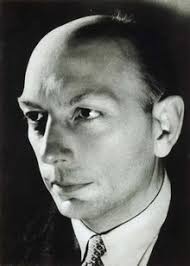
Jean Paulhan is one of those whom we would like to see come back and find again in the future, for those of later years, if possible... We would gladly suggest him. If selfishness remains evil (?), it has proven itself, its proof of welcome, openness, mutual aid.
For many years - those in which I saw him frequently - gently brushing aside the advice of those who wanted to see him write more, make books, a work, show it, Jean Paulhan, with his style from the outset incomparable, turning away from himself, yet so original, found others interesting, especially those still in the making, loved their case, their existence, loved helping them, made it a duty and a joyful adventure to unravel the nascent writer in them.
Anyone who has not seen and heard him with a “newbie” cannot imagine what these meetings were like.
Quite to the other, face to face, without opposing, without returning to himself, without apparently needing it, without "me", with enthusiasm, restraint, astuteness, he penetrated into the mystery opposite, throwing into these still unknown spaces the probe of his unexpected, disconcerting, baroque questions. Famous, different for everyone, were his questions, made to break the ice, to unbalance, to test, to play, to discover.
Years of subtle connivance could follow these moments if the “candidate” entered the game and responded with mobility. As demonstrated by some faithful friendships, he knew how to distinguish particularly those who played the great dangerous game of the existence of the spirit. The minimum to be received with a “good” was that we were still at the questions stage.
In this first meeting, to revive the other in a bad situation, no lukewarmness, no roundness, no these reassuring ways of blind benevolence, no, fresh and alert discrimination remained in order, but, sometimes, as a delightful proof of confidence and a proposal for an alliance, he pretended to consult, yes, he consulted his opposite number – however ignorant he was – to find out, for example, and how if he relied on his judgment, what ultimately should be thought of John Donne, Hegel or René Guénon.
Alliance made, the other, and he followed him, he would follow him for a long time, precede him, feel him, penetrate him, move him, guess him, help him to discover himself, to not fall back, to revive himself, to develop... But he did not show himself, or only just enough, in passing.
Having the modesty of his preferences; what he was definitely, truly attached to, his interlocutor, with whom in short he had gone on a trip, would often have been a great surprise, if he had known it.
Rest, apart from relaxation games – not much. Liking to make people think, turn around, undo ideas, and make those who were too sure of themselves stumble, he fueled the conversation with difficulties to resolve, or to move on.
If thinking, as a solitary operation, is a stage which on many occasions will be surpassed, it could have been in a future century.
Skillful with thoughts, he knew how to free himself from them, as a free logician, practicing all manipulations, as a tactician. No one like him to clear the front of certainties or indifferences, to push it down, to expose your center, not to crush. Rather he tended to discovery of something behind you, of a latent thought, common, still to no one, in suspense, and which he did not want to make decidedly his own either. He often seemed not to care to think on his behalf.
An incredible spectacle that he has given many times, always surprising. Thanks to his confounding memory on all subjects, on all works, old and recent, he suddenly launched one of his confusing, unstoppable propositions, which seemed to come from a gathered assembly, from a library or rather from an electronic machine within him which he had consulted at the last moment.
A man who to hundreds of men in particular, one after the other, generation after generation – he loved the buds –, gave the impression that he grasped them, felt, guessed, and appreciated them in a privileged way, who traveled with many, supported them, found great pleasure in them, such a man, friend of men, would have to live again.