From a Japanese garden to Jean Fautrier
Jacques LauransThis text appeared in the special issue of the Terriers magazine, "Lectures de Jean Paulhan" in October 1984
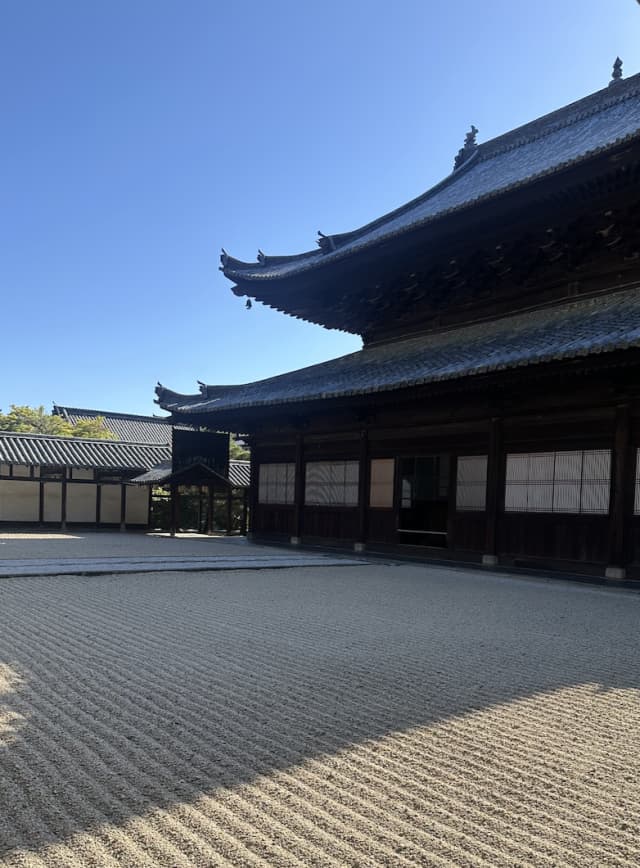
"... the garden which turns and hides seems likely to mislead the visitor: yet there we encounter - rocks, lakes, bridges and trees - nature in its entirety, but arranged in such a way that we can never see it all in one glance."
Jean Paulhan (Fautrier in Japan)
From the beginning, without a doubt, the question of painting constituted in Jean Paulhan's eyes the other side of his thought, the continuous motive of his research touching on the "uncertainties of language" (1). By the attachment that it must always arouse in its questions, it is not unreasonable to think that pictorial creation in general played a somehow more comforting role - in any case, less disappointing - than literature itself. A role of lighting and striking that some painters thus had the privilege of carrying out. Among them, in particular, Georges Braque, Jean Dubuffet and Jean Fautrier who were the closest.
Even in his final essay - "The gift of languages" -, Paulhan continues to return to it, once again specifying the difference in nature, what opposes the painted subject to our thought which, although we have it at our disposal, "is never given to us so entirely that we do not take from it the part which allows us to observe it. So that we only consider it amputated". However, it would be inaccurate and insufficient to believe that Fautrier was only one of Jean Paulhan's favorite painters. When it came to him addressing any question relating to language, he had to be much more than that. But such loyalty to men as such great constancy towards his subject reveals a project of understanding and analysis which goes far beyond the sole literary domain. Which would amount to saying that for Jean Paulhan a well-posed problem around the formation of meaning had the same merits with regard to literature as with pictorial values. We already find an echo of this in a letter addressed to Jean Fautrier which dates from 1943 and in which we seem to read as well the subject of "Fleurs de Tarbes": "I suppose that the big difference between decorative painting and painting is due to the quality of the material. (...) We must start from there to try to see clearly. (...) It is not so far from the question of the commonplace. The material is what transforms the commonplace into painting (...)."
This assiduous association with Fautrier resulted in 1949 in one of Paulhan's most beautiful texts on painting: "Fautrier l'enragé".
As for "Fautrier in Japan", which concerns the subject of this article, it represents the last of the appendices devoted to this same painter.
*
Today when technological power seems to be working to our disadvantage, where the desire for power threatens us with worrying regularity and at a time when we are beginning to feel the dubious effects of an unequivocal conquest of the goods of this world, this text takes on a surprising color. Once the first emotion has passed - the one following the trip itself - Paulhan returns to his thoughts and raises the necessary problem. Just as we need to take a certain step back to appreciate a painting; from Japan, Paulhan rediscovers the present of our history. Thus, within things - as within a country - everything seems clear to us, all the more so because we ourselves claim clarity. But "clear thought is not sufficient in itself (...) It needs to be supported by the obscure (...)_". Even more fatal is the loss of the shadow, its distance and, sometimes, its voluntary negation. Shadow, everyone knows, is not the other side of light - its opposite - but its natural and obligatory component; an identification ring. Light needs shadow to attest to its brilliance otherwise we would disappear in perfect whiteness: "_The grains of dust that we see leading their dance in the ray of sunlight passing through a dark room would not show themselves to us if each of them did not have its black face. But our science and our knowledge have always behaved as if throwing a piece of glass dust in place of the grains of dust would embellish the spectacle. But this is quite simply to eliminate it. This is how they do it. the scientists and the philosophers are against which Zen and the wisdom of every day raise frail defenses, fortifications of twigs. But it is this wisdom, with the help of Japan, which will have to prevail. Thus we see the image of the glass fragments as the projection of a brilliant thought which refuses the surprises of the shadows. These broken glass come from outside, they are foreign to the atmosphere of the environment and hover like a blind thought. They are a product, not a material: a clever combination which is stunning in the reflections, a factory shine, a superfluous material whose apparent transparency negates the true opacity.
We are checking it gradually. What mobilizes Jean Paulhan's thinking comes through the discovery of a material. Her reflection only advances because she was first moved by a living aspect of reality: "For the most striking feature of the Japanese landscape is that not a place, even the smallest one, remains inactive; the fields are partitioned like stained glass windows (...)". From the infinitely small requiring the enclosure of a room, Paulhan slides towards a site which can only appear thanks to "an airplane view". From a closed and empty place, we move towards an open and populated landscape where the hand of man, if it has not left anything to chance, has nevertheless been able to build "following the desire of the earth". However, this filled space which seems to hold the void in horror also has its dark side. Precisely, in the heart of the city where the shadow extends to the least exposed facades. Where human habitation benefits from the slightest reliefs, the isolation of the individual will constitute the fracture of this space which nevertheless seemed to command all possible gestures. And, ultimately, it is not the outrage of cold planning that will absorb the inhabitant because, at the very core of saturation - the Cubist layout model - there will remain a gap that only intimacy will be able to bridge. As Jean Paulhan discerned the tactile space of the Cubist painters by plunging into the sudden darkness of his home, he will have to touch almost each house one by one to reach the person he is looking for: "I live," said the friend whom we finally discovered, "a house so well hidden that, to find it, you have to have known me since my childhood".
Advancing in his successive discoveries, Paulhan then arrives at Japanese art, immediately admitting that its great virtue lies in the subtle arrangement of a gap, by the advantage of a slight defect or lack in extreme perfection. It is therefore not a question of a banal reduction of a part of the world - as fascinating as its accuracy may be -, which always opposes the artist to reality, to the only external form of reality, but of a necessary displacement of the subject which would thus become comparable to "this philosophical smile" that Roger Judrin so rightly discovers in Jean Paulhan. This "irony" also which, "far from being reduced to entertainment" would be "the form of a long meditation" (2).
But Jean Paulhan goes further when he writes in consequence that "the traveler admires that in Japan each miniature - haï-ju, bouquet, calligraphy - resembles the whole of nature, better: reveals it and in a way lets it pass" Here, it seems to me, we touch the key to a statement on "modernity". Because, what does “modern art” represent if not this acceptance of a whole which is refracted in the tenderest fibers of a material? However, this modernity would not be offered as the exclusive sign of an era. It is all the more exalted as his attachment to the old remains sensitive, perceptible: Thus "Jean Fautrier, who is not only the first among modern painters and the Informels: who is among all modern painters the only one who has been able to maintain, in the perfection of his canvases, all the resources and charms of old painting". Obviously, this work owes nothing to the journeys of a concept. It is not a sheet of glass carefully oriented towards a beam of light; nor is it a creation reduced to the too smooth roundness of a sphere. No, it is an active painting immersed in the heart of its element. Fautrier treats "of some mysterious object with several faces which he surrounds and which he tries to retain. And it is not in his paintings, the pure spirit which assimilates an obvious nourishment but in the depths of the soul a communication and our thought suddenly displaced in its most secret region, made of shadow and clarity - finally, to put it in a word - the most Japanese of our painters or - that's all one - the most truthful: the one who best resembles the whole world, and thereby protects it and helps it to continue"
We understand to what necessity such an experience may belong. The rupture that she nourishes is the very fruit of her patience; its instability saves us from all immobility - the deadly immobility of dogmas -. And Jean Paulhan, once again, is not moved by a witticism, by a finesse of reason, but by a way of doing things which spares no conduct, no stopping, no fixation; of a strength which owes much to the happiness of a hand at work, to the shocks of an image which presents itself and hides itself at the same time.
Alternating and without haste, shadow and light share the very object of the painting, for our intention and for the rest of the world. This would finally be the meaning of the journey - and of painting as a journey -: that it disorients us with what we thought we knew best about ourselves; by disturbing our gaze, and by the use of a touch confused with the secret of a feverish matter.
Jacques Laurans
(1) In the NRF of March 1922, we will already read an article on "English Painting" by John Charpentier.
(2) Roger Judrin, “The transparent vocation” by Jean Paulhan (Ed. Gallimard/coll. “Vocations”).