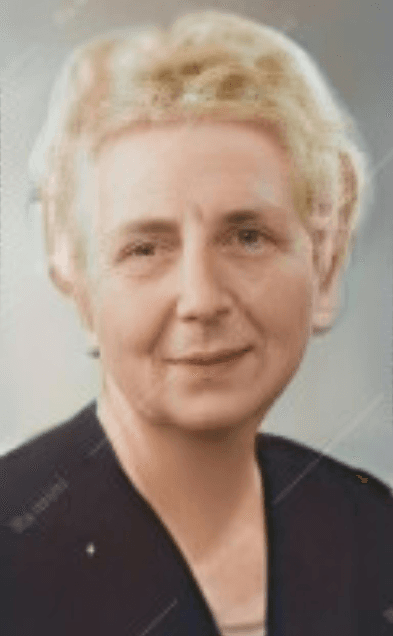
Suzanne Tézenas
When, at the instigation of Pierre Boulez, she founded the Domaine musical in 1954, Suzanne Tézenas was known for a long time date of artistic and literary circles from Paris. Pierre Boulez, who then 29 years old, was music director at the Theater Marigny, directed by Jean-Louis Barrault and Madeleine Renaud. They had just moved into the attic of the theater a rudimentary room, with wooden benches, which had opened its doors with “The Evening of Proverbs”, by Georges Schehade. It was there that took place, under the direction of Hermann Scherchen, the first concert of the serial school. Bach, Gesualdo, Bartok, but especially Messiaen, Varèse, Boulez, Stockhausen, Nono, Barraqué, Pusher, Berio, later Boucourechliev or Amy, in short, all those who had sworn allegiance to the School of Vienna: Alban Berg, Schoenberg, Webern, but also to Stravinsky who had just converted there. The adventure of Domaine musical — led by Pierre Boulez, then by Gilbert Amy—lasted twenty years. If, initially, it was only possible thanks to Barrault-Renaud couple, it is Suzanne Tézenas, both patron, president and secretary of the association, that we owe its sustainability.
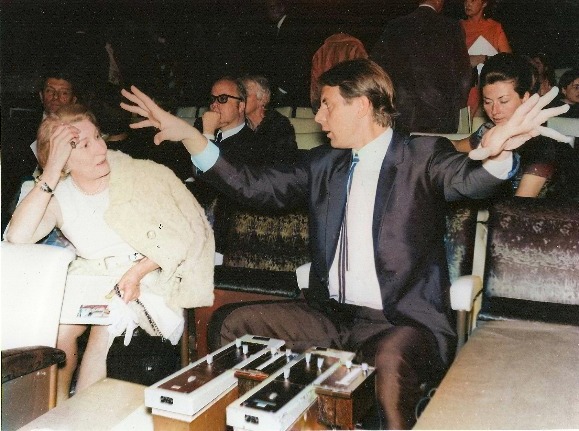
Suzanne Tézenas has just died at the age of 92. These In recent years, she lived withdrawn from the world, after leaving his large apartment on the street Octave-Feuillet where, for more than forty years, she had received everything that mattered in terms of new literature, painting and music. Everyone brought their friends there. It is at her house that we saw, barely out of limbo, Cioran, Ionesco, Schéhadé, Bonnefoy, Gatti, Nimier, Cioran, from Staël, confronted with their elders: Vieira da Silva, André Masson, Paulhan, Jouve, Supervielle, Michaux, Char, Ponge...
It was Suzanne Tézenas who helped Vilar to stage Adamov's first play. It's at she who, immediately after the war, landed Moravia, Piovene, Cingria, Graham Greene. At her house that Pierre Souvtchinsky and Nicolas Nabokov met their old friend Igor Stravinsky, just returned from Russia where he came to be invited by Khrushchev after sixty years of exile. This is where Messiaen discussed with Pichette from an opera libretto on Jesus and Nicholas of Staël of a ballet project with René Char. It's in the salon of rue Octave-Feuillet that a Shy American, John Cage, gave Paris his first concert for “prepared piano”, in 1949. Without really talking about politics, despite the tensions of the time, we saw Raymond Aron there and Saint-John Perse discuss Gaullism and of Europe or Henri Corbin talking about the existence angels, in front of Henri Michaux slightly amazed...
From the moment his young protégés
flew on their own wings, and coming the “great
age » of which Saint-John Perse, Suzanne speaks
Tézenas separated herself from what bore witness
of everything she had done. The documents are
went to the National Library, the papers no longer
intimate at the Jacques-Doucet library. Don't
no longer leaving the tiny apartment where she
was to end her days this month of May, she received
tirelessly Researchers from around the world
whole question him about Drieu La Rochelle, Audiberti, René Daumal, Nicolas de Staël and, well
heard, on the musical field, to which a
professor from Montpellier has just devoted a
doctoral thesis. His memory was infallible.
She was hardly surprised that so many people who
had shared his table are so famous, many posthumously. In the end, no one remained around
of her only photos of the dead. But it is
Pierre Boulez who held, on the day of the funeral,
warm the Calvinist coldness of the temple of
the Oratory, with two clarinet pieces, one of
him, the other from Messiaen. Those who came to say
farewell to “Madame Tézenas” that day knew that
died with her the last symbol of a civilization that we will only know through books.
(Guy Dumur)