Zao Wou-Ki, It's Never Dark
du 19 mai 2021 au 10 octobre 2021
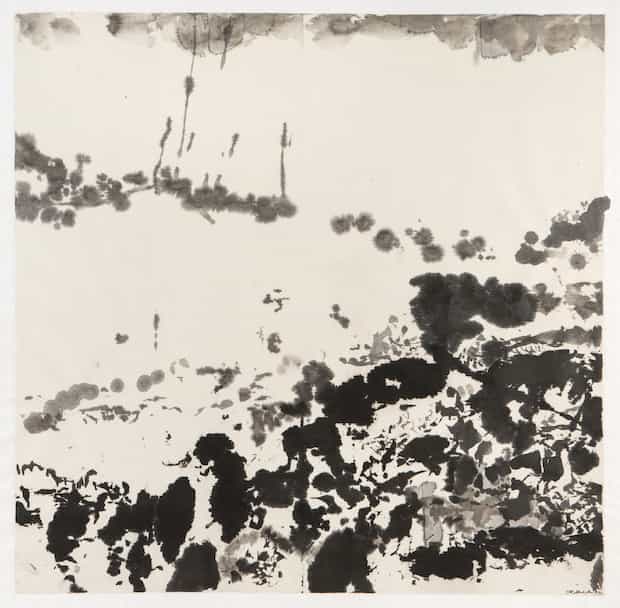
Zao Wou-KiHenri MichauxPaul KleeHenri MatisseIn the period following his installation in Paris in 1948, Zao Wou-Ki explored the theme of daytime or nocturnal light in a series of poetic works simply integrating the representation of the lunar and solar stars. The transition to abstraction made in the mid-1950s through the use of the sign borrowed from Paul Klee, enriched his relationship with light and darkness, then expressed by the play of colored masses, which clash or merge. The practice of Chinese ink, thanks to Henri Michaux from 1970, allowed him to develop Chinese tradition. He then begins work on emptiness, associated with white or reserve, and fullness, associated with the black of ink. This research extends into his painting and makes him discover new spaces. The works of the 1970s and 1980s refer to a darker side corresponding to periods of suffering and mourning. These comings and goings between light and shadow draw their inspiration from the long history of Chinese painting which seeks the balance of opposites.
Guided from his beginnings and until the end of his life by the genius of Paul Cézanne (Hangzhou Landscape, 1946; Homage to Cézanne, 2005), Zao Wou-Ki was also sensitive to the specific light of the southern sun of France. After renting a workshop in the Var between 1958 and 1972 where he met a number of friends, he accepted the proposal of Josep Lluis Sert who built him a workshop in Ibiza in 1973, a new place of creation. From 2004, Zao Wou-Ki stayed several times in summer at the Luberon property of fashion designer Emanuel Ungaro, who was also very attached to his hometown of Aix-en-Provence. Zao Wou-Ki works there “on the motif”, something new for him, and paints a series of watercolors which will be presented for the first time at the Hôtel de Caumont. They reflect the luminosity and colors, sometimes flamboyant, sometimes muted, of the landscapes of the Luberon. These works express at the last moment of his life his unchanging joy of painting.
Zao Wou-Ki à l’Hôtel de Caumont d’Aix-en-Provence - Connaissance des Arts