Charles-Albert Cingria
1
The sign of a great writer is that he can say with naturalness the simplest things in the world, those that would terrify the average writer: “It's raining”, or (more simply): “When you leave Lausanne to go to Geneva by road, it's always impressive.” Or even (in a drier tone): “We are anti-Russian in our cities and towns.” This is why – despite the dry tone – no one would dream of asking him for the slightest proof in any case. But sometimes he gives it away. Here it is: “Someone who enters a public establishment with a beret causes amazement.” He explains himself further and makes his opinion completely indisputable: “I am not saying that the beret is a Russian hairstyle, but I refuse to describe what would happen if instead of a beret, the same character appeared wearing a hat.” And so the title! The title is: Let's Russify a little more. So that the reader feels fulfilled.
I always saw Charles-Albert Cingria wearing a beret.
He has a way, which is unique to him, of saying: “Ah! mais...” (“Ah! but we have to talk about the Capuchin soups!...”) He also enjoys the long strings of adjectives: “Petrarch was in love in a superlative, extraordinary, incendiary, solar way.” He doesn't at all hate words like immarcessible, impudent, wandering, inter-worldliness. Do you think it will bother him to talk (about Fribourg) about Areopagus, philosophers, educational incubators, bookstore centers? No way. He writes as well: “A very small rabbit trembles like a ball of mercury”, as: “The last whore's daughter in the lowest alley - let's say a redhead with strong hair and pale eyes like the water where the pike's waste darts towards the willows...” He has a bold and unctuous style, with something monkish. And once he started, there was no stopping him. He digests everything.
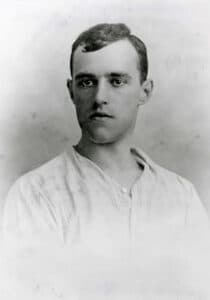
Charles-Albert Cingria is himself a stocky man. Rather small, but thick. Rougeaud, gourmand. Golden, I said it. Extraordinarily agile. He swims like no other.
Ah! but (as he says), we would be mistaken if we believed we were dealing with a baroque or bizarre author. It's quite the opposite. Except that he overuses music and musical explanations, he never says anything other than wise and moderate: that Raphael is a great painter, that it is pleasant to follow a road lined with trees on a bicycle. (He is a great bicyclist). That the moral climate of Friborg is very bearable. (He lived some time ago in Fribourg). How unfair we are, these days, to eloquence. That great feelings must be admired.
It's even Cingria's own charm, this contrast between the oddity of the detail: a science of language very well cooked and recooked, a thick paste, but not at all pasty; no, rather worked in depth like an anthill, where the smallest word, even if it is raining, has its six floors of cellars. Between the oddity of the detail and the extreme simplicity of the meaning: its evidence which passes through to reach us, the first words that come, and just as well the last. So that each page looks like a sum.
Cingria (the man) gives the impression quite well of a madman whose fury would never break out.
Well, it seems to me that that's exactly what literature is. We don't write to be elegant or witty. We don't write to have reasons. Nor even to be right; nor to give a plausible aspect to obviously false theses. We write to know the truth, and to keep it when we know it. We write to be saved. Now, notice that to those who hold the obvious, all reasons are good. And the most baroque first. Everyone knows that it is better to love than to be without love; to live, than not to be born. But why? Ah! well, it's because of the good sun, and the women, and the chocolate ice creams, and the bicycles (the races we do with them). The more obvious and vast the truth, the more difficult it is to say — because everything can say it equally. The truth is when everything bears witness to it, even the bizarre images and the strings of adjectives, and the reasons that seem like nothing. This is the true golden age and we may well have lost it, but sometimes it comes back, we see it pass. Ah! especially in the stories of Charles-Albert Cingria.
From these stories, I realize that I haven't said much. Of course, each Cingria tale has its subject. It is a subject that is sometimes pleasant (Hippolyte hippocampe), sometimes erudite (Lou Sordel), tragic in the realistic genre (Le Camp de César) or realistic in the tragic genre (Xénia). Sometimes we wait for the end with anxiety. It also happens that the story leaves us lastingly moved and disturbed. But I was always advised not to tell the subjects, that it would devalue the book, discouraging possible readers. (That says a lot about bad readers). In any case, I have a better reason not to say anything at all: it is that drama and surprise are at play at every moment. There are more than fifty per page.
2
Charles-Albert Cingria has just died at the age of seventy. We hardly talked about him. We continue. There are two kinds of writers: first the glorious ones, those whom young people come to question on morality, and the fashion journals on politics. The State, later, if they responded well, is responsible for burying them.
There are also those for whom the secret young man in each town dreams of abandoning father and mother and being killed if necessary. These are those that the reader, most often, finds obscure and even unintelligible. They take their side of it. They happen to be proud of it. “I prefer to be misunderstood,” said the master of Cingria, Petrarch, “rather than to be approved.”
Cingria did not see himself commonly approved. It was not for lack of merits, nor even of literary qualities: he was eloquent and lyrical. He had a taste for maxims. He loved the obvious, he loved it with so much fire that it was considered paradoxical. Perhaps he offered too many qualities.
In literature there is an economy of merits. Each reader knows what he should expect from a storyteller, a scholar, a philosopher: he prepares himself in advance to be enchanted, instructed, introduced to the truth. But Cingria was confusing his world: too cheerful and too sensitive to beauty for a Chartist; too direct and naive for a metaphysician. Finally, he introduced measure, sequence in ideas, rigor and a sort of Lotharingian syntax in the genre least suited to so many qualities: the tale (in which he excelled). On top of that, a lively, salubrious, sharp tone - insolent. He was confusing his world and didn't seem sorry to be confusing them.
All in all, less clear than dazzling. He came and went. He loved life, which (he said) “proves”. He sang and played various instruments, like a troubadour. He was poor. In his room on Rue Bonaparte, a bicycle swung above the bed, two or three harpsichords seemed to hang on the walls; Under the bed there were papers, a bottle of cognac and several empty tin cans.
Here he is dead. On this point too, he had his idea: death was, to hear him, a rather pleasant event in itself - because he believed in its immortality; but the worst joke to make on one's parents and friends, an almost indelicate way of getting rid of them. For him we are nothing more than this crowd of writers and schools and markets and trams and teachers, which is moving away at full speed.
Jean Paulhan, 1955.
Resources
Association of Friends of Charles-Albert Cingria
Charles-Albert Cingria, RTS - video
Wanderings with Charles-Albert Cingria
Charles-Albert Cingria: The Big Dipper
Swiss Florides and other texts, Charles-Albert Cingria
Bibliography of texts published in the NRF
The texts below, published in La Nouvelle Revue Française, are grouped into four main sets: texts by Charles-Albert Cingria, notes and columns by the author, texts about the author, and, when available, translations by the author.
Texts by Charles-Albert Cingria
- Hippolyte Hippocampe, 1934-06-01
- Notes [aux Questions de C. F. Ramuz], 1936-05-01
- Notes (II) [aux Questions de C. F. Ramuz], 1936-06-01
- Recensement, 1937-06-01
- Le musical pur, 1940-05-01
- Portrait de Paul Léautaud, 1955-03-01
- Lettre à Adrien Bovy, 1955-03-01
- Novalaise, 1955-12-01
Notes by Charles-Albert Cingria
These texts by Charles-Albert Cingria may include reading notes, mood notes, performance reviews, miscellaneous pieces, or previously unpublished texts. They appeared in NRF sections such as Chronique des romans, L'air du mois, Le temps comme il passe, etc., or in tribute issues.
- La vie des crapauds, par Jean Rostand (Stock), 1933-06-01, Notes : littérature générale
- Sienne la bien-aimée, par André Suarès (Émile-Paul), 1933-07-01, Notes : essais et mémoire
- L'œuvre de Strawinsky, par Domenico de Paoli (Scheiwiller), 1933-10-01, Notes : la musique
- De la philosophie chrétienne, par Jacques Maritain (Desclée, de Brouwer et Cie), 1933-11-01, Notes : la philosophie
- Le génie de Paul Claudel, par Jacques Madaule (Desclée et Brouwer), 1934-01-01, Notes : la poésie
- La Voragine, par José Eustasio Rivera (Rieder), 1934-04-01, Notes : lettres étrangères
- L'incrédulité du Père Brown, par G.-K. Chesterton (Éditions de la N. R. F.), 1934-06-01, Notes : lettres étrangères
- Saint-Thomas d'Aquin, par G.-K. Chesterton (Revue Universelle), 1934-06-01, Les revues
- Héliogabale ou L'anarchiste couronné, par Antonin Artaud (Denoël et Steele), 1934-07-01, Notes : les essais
- Images de Paris, par Marcel Jouhandeau (Gallimard), 1934-09-01, Notes : les essais
- Introduction, 1934-09-01, L'air du mois
- Richard Wagner, par Paul Claudel (La Revue de Paris), 1934-11-01, Notes : la poésie
- Frimaire-Nivose, 1935-01-01, L'air du mois
- Chroniques de ma vie, par Igor Strawinsky (Denoël et Steele), 1935-06-01, Notes : mémoires
- Conversations dans le Loir-et-Cher, par Paul Claudel (Éditions de la N. R. F.), 1935-07-01, Notes : essais et fantaisies
- Le Recueil Trepperel, par Eugénie Droz (Librairie Droz), 1935-09-01, Notes : littérature générale
- Voyage en Suisse, 1935-10-01, Revue des revues
- L'Église et la musique, par A. Gastoué (Grasset), 1936-10-01, Notes : les arts
- Morceaux choisis, de Max Jacob (Gallimard), 1937-03-01, Notes : la poésie
- Les grands cimetières sous la lune, par Georges Bernanos (Plon), 1938-06-01, Notes : les essais
- Forêt vierge, de Ferreira de Castro (Grasset), 1939-01-01, Notes : lettres étrangères
- Littératures de la Suisse (Éditions du Sagittaire), 1940-04-01, Notes : lettres étrangères
- Chronique dialoguée, 1953-03-01, Le temps, comme il passe
- Témoignage-préface, 1954-12-01, Dimanche
- Encore Paul Léautaud, 1955-03-01, Les revues, les journaux
- Salut aux Lacs, 1956-12-01, Le temps, comme il passe
- Dormeurs éveillés, 1958-07-01, Les revues, les journaux
- Éloge du manteau, 1963-11-01, Le mois
- Quatre lettres à Max Jacob, 1964-07-01, Textes
- Quatre lettres, 1967-01-01, Textes
- Quatre lettres, 1967-03-01, Textes
- Quatre lettres, 1967-09-01, Textes
Texts about Charles-Albert Cingria
These texts may include thematic studies about the author, correspondence, reading notes on works by or about the author, interviews conducted by the author, or works edited by the author.
- Pendeloques alpestres, de Charles Albert Cingria (Mermod), by Pierre Leyris, 1932-01-02, Notes : romans et récits
- Pétrarque, par Charles Albert Cingria (Les Cahiers Romands), by Denis de Rougemont, 1933-04-01, Notes : littérature générale
Chronological distribution of texts published in the NRF (1908-1968)
This chart shows the chronological distribution of texts across the four categories defined above: Texts, Notes, Translations, and Texts about the author.
Bibliography of texts published in the journal Mesures
The texts below, published in the journal Mesures, are grouped into two sets: texts by Charles-Albert Cingria and texts translated by the author.
Texts by Charles-Albert Cingria
- Le Haut Bief, 15 avril 1936 [196 p.]
- Ieu Oc Tan, 15 avril 1937 [206 p.]
- Sordel de Goito, 15 octobre 1938 [170 p.]
Translated texts by Charles-Albert Cingria
- Charles-Albert Cingria, Ieu Oc Tan, 15 avril 1937 [206 p.]
Bibliography of texts published in Les Cahiers de la Pleiade
The texts below, published in Les Cahiers de la Pleiade, are grouped into three sets: texts by Charles-Albert Cingria, texts translated by the author, and texts about the author.