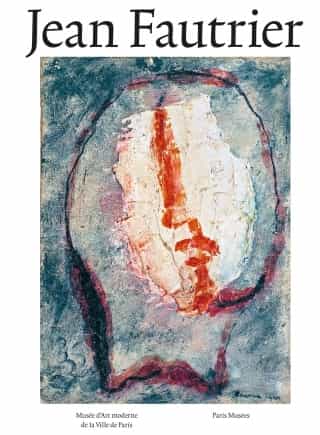
Jean Fautrier, Matter and Light
du 26 janvier 2018 au 20 mai 2018
Jean FautrierLittle exhibited, this solitary artist is today considered the most important precursor of informal art in 1928, inventor of high pastes in 1940 and a major figure in the renewal of modern art after Cubism. The exhibition will be a resumption of the Jean Fautrier retrospective which took place this summer at the Kunstmuseum in Winterthur (Switzerland) supplemented with works from the Museum of Modern Art, several French museums and private collections.
Jean Fautrier is particularly linked to the history of the collections and programming of the Museum of Modern Art of the City of Paris. Indeed, in 1964, the museum presented its first retrospective, produced in close collaboration with the artist following his significant donation. In 1989, a second retrospective provided a new perspective on his entire rich, varied and particularly unique body of work.
This new exhibition comes almost thirty years after the previous one. It is made up of around 200 works - including nearly 160 paintings, drawings and engravings, as well as a large group of sculptures - from numerous public and private collections, French and foreign. The exhibition will include almost the entire donation made by the artist to the museum, supplemented over time by significant donations and purchases. The Museum of Modern Art today has the largest Fautrier collection in museum collections (more than 60 works).
Jean Fautrier's painting career began in 1920. His painting, then figurative, consists of still lifes, landscapes and nudes which range from raw realism to a representation made of dark light with almost abstract shapes. After a brief recognition, the economic crisis of 1929 finally got the better of his career as an artist. Forced to leave Paris, he settled in the early 1930s in the Alps where he lived for several years, working as a ski instructor and manager of a hotel with a dance hall.
Returning to Paris in 1940, he found or met writers such as André Malraux, Francis Ponge, Paul Éluard, Georges Bataille and especially Jean Paulhan who would be his most fervent defender. During the war years, he developed a new form of image in which material took on more and more importance in the representation of objects, landscapes or bodies.
In his famous series - Hostages (1943-1945), Objects (1955), Nudes (1956), Partisans (1957) - material effects become the main subject of the work. Jean Fautrier uses a glue paint which mixes masses of pigments with transparent or opaque inks, from which sought-after and luminous harmonies emerge, thus creating various impastos and textures causing a certain anxiety. In 1960, he was celebrated at the Venice Biennale with the Grand Prix for painting which he shared with Hans Hartung. Fautrier died in the summer of 1964, shortly after his first retrospective at the Museum of Modern Art of the City of Paris.
This exhibition is co-organized with the Kunstmuseum Winterthur
Guest curator: Dieter Schwarz